Canada’s landscape offers some of the most diverse and demanding driving conditions anywhere, ranging from rugged forestry roads in British Columbia to rocky backcountry trails in Alberta, muddy seasonal routes across the Prairies, and the harsh freeze-thaw cycles of Eastern Canada. For drivers who rely on their trucks, Jeeps, or SUVs to handle these environments, choosing the best off-road wheels is essential for both performance and safety.
How Off-Road Wheels Differ From OEM Wheels?
Factory wheels are designed for comfort, on-road stability, and general all-purpose use. Off-road wheels, on the other hand, are engineered specifically for durability and control in unpredictable terrain. They use stronger aluminum alloys, reinforced bead seats, and purpose-built designs to handle impacts from rocks, ruts, washboard surfaces, and deep snow. Many off-road models also offer sizes, offsets, and load ratings tailored to lifted or modified vehicles, something OEM wheels rarely accommodate.

Why Durability, Fitment, Performance & Design Matter?
In Canada’s varied terrain, the right wheel construction directly affects traction, handling, and reliability. Stronger materials prevent cracks and bending on rough trails. Proper fitment ensures clearance for larger off-road tires and avoids rubbing during articulation. Optimized weight and structural design enhance acceleration and braking, especially important for vehicles carrying gear or towing. And of course, styling plays a role too; off-road wheels can dramatically sharpen the look of a truck or SUV while delivering true functional benefits.
What You’ll Learn in This Guide?
This article breaks down everything you need to know before choosing the best off-road wheels for Canadian conditions, including:
- The top brands trusted by off-road enthusiasts
- Materials and construction types (cast, flow-formed, forged)
- The right wheel sizes and widths for popular vehicles
- Simulated vs. true beadlocks and when each is needed
- Essential fitment factors: bolt patterns, offsets, load ratings
- Wheel recommendations for specific use cases from rocky trails to overlanding to winter-dominant regions
Whether you're building a capable weekend trail truck or a daily driver built for Canadian backroads, this guide will help you choose the perfect off-road wheels for your needs.
What Makes a Wheel “Off-Road Ready”?
When choosing the best off-road wheels for Canadian terrain, the build quality and engineering behind the wheel are just as important as its style. True off-road wheels, such as lock off-road wheels and premium options like Fuel Off-Road wheels, are specifically designed to handle the severe stress, impacts, and unpredictable conditions found on Canada’s backroads and trail systems. At Canada Custom Autoworks, we evaluate wheels based on their materials, construction, and design to ensure they deliver reliable performance where OEM wheels fall short.
Structural Materials
Off-road wheels rely on advanced aluminum alloys engineered to withstand heavy loads, harsh impacts, and extreme temperature swings common across Canada.

A356 Aluminum
Most high-quality off-road wheels are made from A356 aluminum, a strong and lightweight alloy known for its durability. When paired with T6 heat treatment, A356 becomes even more resistant to cracking and bending, critical for rocky trails or deep ruts.
Cast vs. Flow-Formed vs. Forged
- Cast Wheels: Reliable and cost-effective, ideal for general off-road use. Many lifestyle-oriented models, like some Fuel Off-Road wheels, fall into this category.
- Flow-Formed Wheels: Offer a superior strength-to-weight ratio, making them excellent for aggressive driving and heavier truck builds.
- Forged Wheels: Premium options with maximum strength and minimal weight. These are ideal for extreme off-roading or high-load overlanding setups.
Strength-to-Weight Considerations
Off-road wheels need to be strong enough to withstand impacts, yet light enough to maintain acceleration, braking, and fuel efficiency, especially when paired with oversized tires.
Impact Resistance & Heat Treatment (T6)
T6 heat-treated wheels undergo a controlled heating and cooling process that increases hardness and structural integrity. This is essential for preventing damage when navigating rocky ledges, deep potholes, and uneven surfaces.
Engineering & Construction
Beyond the metal itself, the geometry of an off-road wheel determines how well it handles real-world stress.
Lip Design, Load Ratings & Reinforcement. A reinforced outer lip helps protect against curb and trail impacts. Higher load ratings are crucial for trucks equipped with campers, tow setups, or overlanding gear, common scenarios for Canadian drivers.
Bead Seat Design & Off-Road Stress Factor. Off-road wheels often feature stronger bead seats to keep tires secure at lower PSI. This is especially important with lock-off road wheels, beadlock-styled models designed to maintain tire stability during rock crawling or soft-terrain driving.
Design Characteristics That Matter Off-Road. A wheel’s appearance isn’t just cosmetic, its design affects cooling, maintenance, and performance.
Open vs. Closed Spoke Patterns
- Open spoke designs help reduce weight and allow for better brake cooling.
- Closed or denser spoke patterns offer additional strength and rigidity for heavy-duty applications.
Both styles are available across popular lines from Fuel Off-Road Wheels and other top brands carried at Canada Custom Autoworks.
Brake-Clearance Requirements. Modern trucks and SUVs often have larger brake packages. Off-road wheels must be engineered with appropriate spoke spacing and barrel dimensions to ensure proper clearance.
Debris Shedding & Maintenance. Deep mud, slush, and road salt are realities of Canadian driving. Wheels with self-clearing spoke layouts help prevent buildup that can affect balance or corrosion resistance, another reason to invest in premium off-road-ready designs.
Wheel Types for Off-Roading
Choosing the right wheel type becomes even more important when building a truck, Jeep, or SUV for Canadian trails, especially for drivers wondering which SUVs have 4-wheel drive and how wheel construction impacts capability. Below is a clear breakdown of the primary off-road wheel types, their advantages, and when each one makes sense.
| Wheel Type | Pros | Cons | Best Applications | Strength / Weight | Street Legality | Typical Users |
| Cast Aluminum Wheels | Affordable, widely available, durable enough for most 4WD SUVs and trucks | Heavier than flow-formed or forged; not ideal for extreme impacts | Daily driving, light–moderate off-roading | Moderate strength, higher weight | Fully street-legal | Drivers of 4WD SUVs, pickups, and crossovers used for mixed driving |
| Flow-Formed Wheels | Excellent strength-to-weight ratio, affordable mid-tier pricing | More expensive than basic cast wheels | Overlanding, spirited off-roading, lifted trucks | High strength, reduced weight | Fully street-legal | Off-road enthusiasts who want performance without forging costs |
| Fully Forged Wheels | Maximum strength, lightest weight, extremely durable | Premium price | Rock crawling, heavy towing, severe terrain | Highest strength, lowest weight | Fully street-legal | Extreme off-roaders, performance builds, professional users |
| Simulated Beadlock Wheels | Aggressive styling, accessible price, and no maintenance complexity | No real bead-clamping ability; purely cosmetic hardware | Show builds, daily drivers, mild off-road | Similar to cast or flow-formed, depending on the construction | Fully street-legal | Drivers wanting the beadlock look without functionality |
| True Beadlock Wheels | Allows ultra-low PSI, prevents de-beading, ideal for hardcore trail use | Higher maintenance, heavier, not always DOT-approved | Rock crawling, sand, mud, and technical terrains | Very high strength, heavier due to hardware | Not always street-legal (varies by region) | Serious off-roaders, trail rigs, competition vehicles |
How to Choose Off-Road Wheels?
Choosing the right off-road wheels is more than just selecting a style you like. Fitment determines how your truck, Jeep, or SUV performs on and off the road, affecting everything from traction and suspension travel to brake clearance and tire compatibility. The following fitment essentials will help ensure your build is safe, functional, and optimized for Canadian driving conditions.

Bolt Pattern & Hub Bore
Every vehicle has a specific bolt pattern and hub bore size. An exact match is non-negotiable for proper mounting, safety, and alignment.
- Common bolt patterns: 5x127 (Jeep), 6x139.7 (GM, Toyota), 8x170 (Ford Super Duty).
- Hub bore: A correct hub-centric fit reduces vibration and improves off-road stability.
At Canada Custom Autoworks, we verify bolt pattern and center bore measurements for each vehicle to ensure accurate fitment.

Diameter & Width Selection
Off-road wheels generally range between 15" and 20", with widths from 7" to 12", depending on tire size and terrain.
- Smaller diameters (17") provide more sidewall and better off-road grip.
- Larger diameters (18"+) offer styling benefits and brake clearance for newer trucks.
- Wider wheels support wider tires but may require trimming or a lift.
Canadian terrain varies dramatically, so smaller diameters paired with all-terrain or mud-terrain tires typically offer the best off-road performance.

Offset & Backspacing Explained
Offset determines how far the wheel sits in or out of the fender. This influences handling, clearance, and your vehicle’s stance.
- Negative offset: Wider stance, improved stability, better clearance inside the wheel well.
- Positive offset: Tucks the wheel inward, often needed for stock-height vehicles.
Proper offset prevents rubbing at full lock and during suspension articulation critical when navigating rocky or uneven Canadian trails.
Load Rating & Real-World Durability
Off-road wheels must support the weight of your vehicle plus any added cargo, gear, or towing load.
- Heavy-duty trucks and overland rigs require wheels with high load ratings.
- Lightweight wheels may flex under heavy impact or towing stress.
Canada’s backcountry roads can be unforgiving, making strong, properly rated wheels essential for durability and safety.
Top Off-Road Wheel Brands
Canada’s terrain demands wheels engineered for strength, precision, and long-term durability. Below are some of the most trusted names in the industry, brands known for building high-performance off-road wheels capable of handling rugged backcountry conditions, deep snow, and uneven surfaces found across the country. Whether you're designing a trail-ready build or refining a daily-driven 4x4, these manufacturers deliver proven quality.
Armed Off-Road
Armed Off-Road specializes in bold, aggressive wheel designs engineered for trail performance. With durable construction and strong load ratings, these wheels cater to drivers who want both capability and standout aesthetics.

ATX Series
ATX Series wheels are designed with functional simplicity and rugged dependability in mind. Built for harsh environments, they offer strong load ratings, practical designs, and finishes resistant to corrosion and winter road salt.

American Force
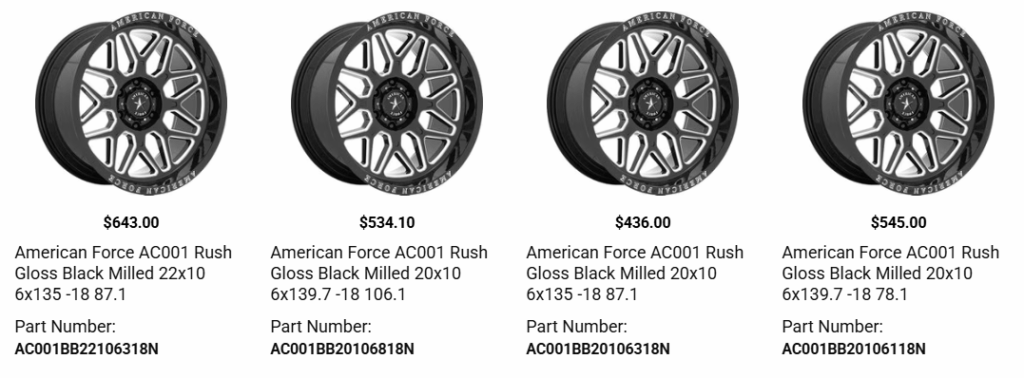
A leader in the premium forged-wheel market, American Force produces fully forged aluminum wheels known for exceptional strength and long-term durability. These wheels are ideal for lifted trucks, heavy-duty builds, tow rigs, and aggressive off-road setups where performance and reliability take priority.
American Racing
One of the most iconic names in wheel manufacturing, American Racing provides classic designs blended with modern engineering. Their off-road lineup focuses on durability and reliability for trucks and SUVs, making them a strong choice for enthusiasts seeking timeless style and dependable construction.

Asanti
Asanti is known for premium craftsmanship and luxury-focused wheel designs. While many Asanti models are aimed at street performance, they offer select options built to withstand demanding conditions without compromising sophistication or style.

Black Rhino
Black Rhino is one of the most respected names in the off-road space, producing wheels built specifically for lifted trucks, Jeeps, and adventure-ready SUVs. With reinforced lips, high load ratings, and rugged styling, they remain a top choice for Canadian off-road enthusiasts. They also offer options compatible with gear off-road wheel setups for more specialized builds.

Black Rhino Powersports
Engineered for UTVs, side-by-sides, and smaller 4x4 platforms, Black Rhino Powersports wheels offer the same durability as their full-size truck lineup but in lightweight, compact designs. Ideal for riders exploring forest trails, dunes, or technical backcountry routes.

Off-Road Wheel Sizing With Tires
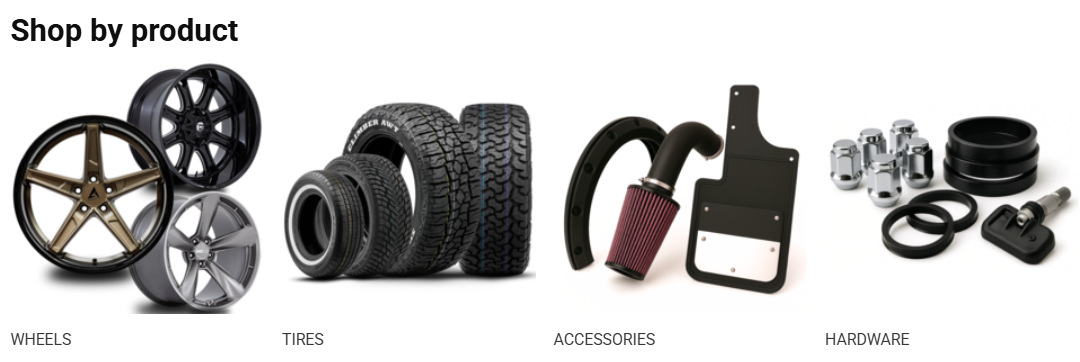
Selecting the right wheel-and-tire combination is one of the most important steps in building a capable off-road setup. The relationship between wheel diameter, wheel width, tire size, and vehicle suspension determines how well your truck, Jeep, or SUV handles rough terrain and whether the setup fits without rubbing. Below is an expert breakdown to help you choose the ideal pairing for Canadian off-road conditions.
Common Wheel & Tire Pairings
Certain wheel and tire combinations have become industry standards because they balance performance, clearance, and drivability. Here are some of the most popular off-road pairings:
| Wheel Size | Common Tire Size | Typical Fitment Notes |
| 17x8.5 / 17x9 | 35x12.50R17 | Ideal for lifted trucks and Jeeps; excellent off-road flex and sidewall strength |
| 17x9 | 37x12.50R17 | Requires a lift and proper offset; great for rock crawling and overlanding |
| 18x9 | 33x12.50R18 or 285/65R18 | Works well on leveled full-size trucks; balanced highway and off-road performance |
| 18x9 | 35x12.50R18 | Often needs a level or small lift; aggressive stance with strong trail capability |
| 20x9 / 20x10 | 33x12.50R20 | Popular for truck owners who want style + off-road capability |
| 20x10 | 35x12.50R20 | Requires correct offset and often trimming; strong visual impact |
These combinations provide reliable clearance, good sidewall performance, and predictable handling when paired with the right suspension.
How to Avoid Rubbing?
Rubbing occurs when oversized tires contact fenders, liners, sway bars, or suspension components. To minimize or eliminate rubbing:
- Choose the Correct Offset
- Too much positive offset → tire sits inward and may hit suspension components.
- Too much negative offset → tire pokes outward and may contact fenders while turning.
A balanced offset helps maintain clearance inside the wheel well while preventing outer fender rub.
- Match Width to Tire Size. A 12.50-wide tire typically pairs best with 8.5"–10" wide wheels.
Going too wide stretches the tire; too narrow creates bulging and increases sidewall flex. - Consider a Leveling Kit or Small Lift. Many trucks need only a 1"–2" level to clear 33s or 35s.
- Trim or Heat Mold When Necessary. Some vehicles require light trimming of plastic fender liners common on Tacomas, Rangers, and GM trucks.
Proper fitment ensures your off-road wheels deliver stable, predictable handling, even when articulating over uneven terrain.
Benefits of Downsizing Wheel Diameter for Off-Road Grip
Downsizing, often called “minus sizing,” means selecting a smaller wheel with a larger tire. This is a major advantage for off-road driving, especially in Canada’s mixed terrain.
- More Sidewall = Better Flex. A taller sidewall absorbs impacts from rocks, roots, and potholes far more effectively than low-profile tires.
- Improved Traction on Uneven Surfaces. Sidewall flex helps the tire conform to terrain, increasing grip on:
- Rocks
- Mud
- Snow
- Washboard gravel roads
- Better Ride Comfort. Larger tires soften harsh bumps and vibrations, ideal for long overland routes.
- Greater Protection Against Wheel Damage. With more rubber between the wheel and the trail, your wheels are less likely to bend or crack on impact.
- Enhanced Winter Performanceє Downsized wheels paired with larger all-terrain or winter-rated tires perform significantly better on icy or snow-packed Canadian roads.
Choosing the Right Off-Road Wheels for Your Build
Selecting the best off-road wheels comes down to understanding how materials, construction, size, fitment, and design all work together to support your specific driving needs. Whether you’re navigating rocky mountain passes, muddy logging roads, deep Canadian snow, or rugged backcountry trails, the right wheel setup dramatically improves durability, traction, handling, and overall confidence behind the wheel. By choosing high-quality wheels, matching them with the appropriate tire size, and ensuring proper fitment, you set your truck, Jeep, or SUV up for long-term performance and reliability.
At Canada Custom Autoworks, our specialists are here to help you choose the perfect wheels for your vehicle, whether you're planning a lift, upsizing to 35s, switching to a beadlock-style design, or upgrading your daily-driven 4x4. If you’re unsure about offsets, bolt patterns, tire pairings, or rubbing concerns, we’re always ready to assist with expert fitment advice.
Explore our full lineup to start building your next setup:
- Shop Off-Road Wheel Collections
- Browse Tire & Wheel Packages
- View Customer Galleries for Inspiration
With the right off-road wheels and a properly matched tire setup, your vehicle will be ready for any terrain Canada can throw at it.