Upsizing tires is one of the most common upgrades drivers consider. Whether you want a more aggressive stance, improved ground clearance, or enhanced road presence, larger tires can dramatically change how your vehicle looks and performs.
But the big question remains: will upsizing your tires void your warranty?
The answer is not a simple yes or no. It depends on how the change is made, how extreme the size difference is, and whether the modification directly causes a mechanical issue.
How vehicle warranties actually work?
Most factory warranties do not automatically become void simply because you install larger tires. Manufacturers must be able to demonstrate that a modification directly caused a failure to deny warranty coverage for that specific component.
For example:
- If you upsize moderately and your infotainment system fails, the tires are unrelated.
- If you significantly increase tire diameter and experience drivetrain stress or premature suspension wear, a manufacturer could argue that the larger tires contributed to the issue.
In other words, coverage can be denied for specific affected parts not your entire vehicle.
What happens when you increase tire size?
Upsizing affects more than appearance. It can change:
- Speedometer accuracy
- Effective gear ratio
- Braking performance
- Steering response
- Fuel economy
- Load on suspension and drivetrain components
A small plus-one upgrade (for example, moving from 16” to 17” wheels while keeping overall diameter nearly identical) is generally low risk when done correctly.
Examples of responsible sizing upgrades include:
- iLink Multimatch A/S 205/50R17 93W BSW 420 A A Tires
- iLink Multimatch A/S 215/65R16 102H BSW 420 A A Tires
- iLink Multimatch A/S 225/65R17 106H BSW 420 A A Tires
- iLink Multimatch A/S 235/45R19 99W BSW 420 A A Tires
- iLink Multimatch A/S 245/40R18 97W BSW 420 A A Tires
These types of sizing adjustments typically maintain factory load ratings and overall diameter within acceptable limits.
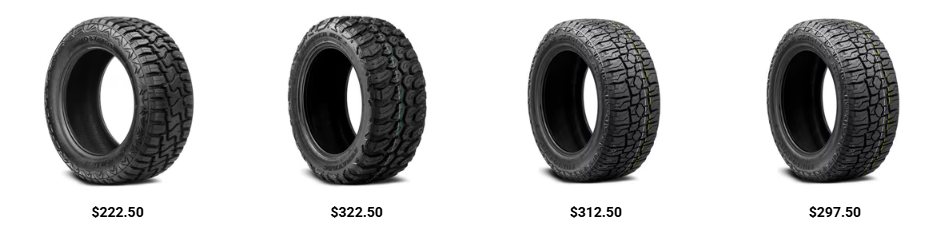
However, moving to significantly larger off-road sizes such as:
introduces more substantial changes. Larger, heavier tires increase rotational mass and drivetrain load, which may impact warranty coverage if mechanical issues arise.
How to upsize safely?
Before increasing your tire size, it’s important to understand that safe upsizing is not about choosing the biggest tire that fits it’s about maintaining a balance between performance, reliability, and warranty protection. The following table outlines the key technical principles that help ensure your upgrade remains within safe mechanical limits while minimizing the risk of warranty-related concerns.
| Guideline | Why it matters | Recommended standard |
| Keep the overall diameter close to the factory specification | Prevents inaccurate speedometer readings, reduces drivetrain strain, and maintains proper gearing | Stay within 3% of the original tire diameter |
| Maintain proper load rating | Ensures the vehicle can safely carry its designed weight without overstressing components | Match or exceed the factory load index |
| Avoid extreme offset or clearance issues | Prevents rubbing that can damage suspension, steering, and body components | Confirm proper wheel offset and full suspension clearance |
| Consider recalibration if needed | Maintains accurate speed readings and proper transmission shift points after significant size changes | Perform speedometer recalibration when upsizing beyond minor adjustments |
When are warranty concerns most likely?
Warranty disputes typically occur when:
- Drivetrain components fail after major tire upsizing
- Suspension damage is linked to increased unsprung weight
- Electronic driver assistance systems malfunction due to incorrect tire diameter
Mild, professionally installed upgrades rarely create problems.
The professional advantage
The difference between a safe upgrade and a risky one comes down to proper fitment planning. Tire diameter, width, offset, and load index must all work together within your vehicle’s mechanical tolerances.
At Canada Custom Autoworks, we evaluate:
- Factory specifications
- Intended driving conditions
- Suspension setup
- Clearance limits
- Warranty considerations
Our team ensures your tire upgrade enhances performance and style without compromising reliability.
Final verdict
Yes, you can upsize your tires without automatically voiding your warranty, but only when the upgrade is calculated, compatible, and professionally installed.
If you're considering larger tires and want complete confidence in your decision, visit Canada Custom Autoworks. Our specialists will guide you through safe sizing options tailored to your vehicle, driving style, and warranty protection needs.