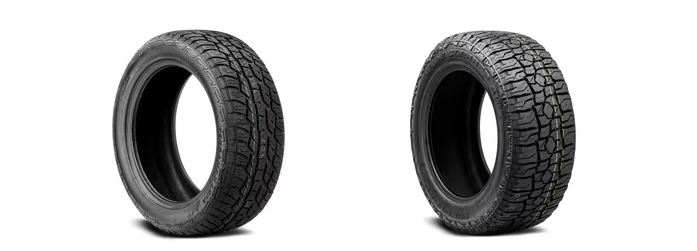
Changing your tire size or adding a lift does more than just alter how your truck or SUV looks and sits. It directly impacts how your drivetrain operates, especially when it comes to gearing and overall performance.
Many drivers focus on clearance and appearance, but larger tires effectively change your gear ratio by increasing the distance traveled per rotation. This can lead to reduced acceleration, added strain on the transmission, and noticeable drops in fuel efficiency. Understanding how these changes affect your vehicle helps you decide whether additional upgrades, like regearing, are necessary to maintain proper performance.
At Canada Custom Autoworks, this is a question we hear all the time. The short answer is that in many cases, yes, changing your gearing is either recommended or necessary to maintain proper performance, efficiency, and longterm reliability.
What happens when you install bigger tires
When you increase tire size, you are effectively changing your vehicle’s final drive ratio. Larger tires travel farther with each rotation, which means your engine has to work harder to move the vehicle.
This leads to several noticeable changes in how your vehicle drives:
- Slower acceleration
- Reduced throttle response
- Poorer fuel economy
- More frequent or delayed shifting
- Decreased towing performance
Even though the upgrade may look great, the drivetrain is now operating outside of its optimal range.
What does changing the gearing do
Regearing means adjusting the differential gear ratio to better match your new tire size. This restores the balance between engine power and wheel rotation.
With the correct gearing, your vehicle can:
- Regain lost acceleration and responsiveness
- Shift more smoothly and consistently
- Reduce strain on the transmission and engine
- Improve drivability both on and off road
In simple terms, it helps your vehicle feel closer to stock again, even with larger tires.
When should you change the gearing
Not every upgrade requires a regear, but there are clear situations where it becomes important.
Tire size increase
The bigger the jump in tire size, the more likely you are to need to change gearing.
- Up to 1 " larger than stock
Usually not necessary - Around 2 "es larger
Recommended for better performance - 3 "es or more
Strongly recommended or required.
Vehicle usage
How you use your vehicle matters just as much as tire size.
- Daily driving
You may tolerate minor performance loss without regearing - Towing or hauling
Regearing becomes important to maintain power and reduce strain - Offroad driving
Proper gearing improves control, torque delivery, and overall capability
Engine and transmission
Vehicles with smaller engines or certain transmission setups are more sensitive to tire size changes.
- Smaller engines typically need more aggressive gearing adjustments
- Larger engines can compensate slightly better, but still benefit from proper ratios
Signs your vehicle needs regearing
If you have already upgraded your tires, there are a few clear indicators that your gearing is no longer ideal:
- The vehicle feels sluggish or underpowered
- It struggles to maintain speed on hills
- The transmission is constantly shifting or hunting for gears
- Fuel consumption has noticeably increased
- Towing performance has dropped
If you are experiencing one or more of these, regearing is likely the next step.
Can you avoid regearing
In some cases, yes. If your setup is mild and your expectations are realistic, you may not need to change gearing right away.
You can often avoid regearing if:
- You stay close to the stock tire size
- You do not tow or carry heavy loads
- You mainly drive in the city or on flat highways
- You are comfortable with slightly reduced performance
However, once you move into larger setups like 35" tires or beyond, skipping this step usually leads to compromises you will notice every time you drive.
Expert insight from Canada Custom Autoworks
From our experience, regearing is not just about improving performance. It is about protecting your drivetrain and making sure your build works as a complete system.
We regularly see vehicles running oversized tires on factory gearing, and the longterm effects are consistent. Increased wear, poor drivability, and unnecessary stress on major components.
The best results always come from planning your build properly from the start, rather than correcting issues later.
So, do you need to change the gearing
If your upgrade is minor, you may be able to get away without it. But if you are running significantly larger tires or using your vehicle for towing or offroad driving, regearing is one of the most important upgrades you can make.
It ensures your vehicle performs the way it should, stays efficient, and remains reliable over time.
Ready to build your setup the right way
If you are planning bigger tires or already feeling the effects of your current setup, the team at Canada Custom Autoworks can help you choose the right gearing for your vehicle.
Contact us today to get expert advice and build a setup that looks right and drives even better.