What Are Haida Tires Known For in Canada?
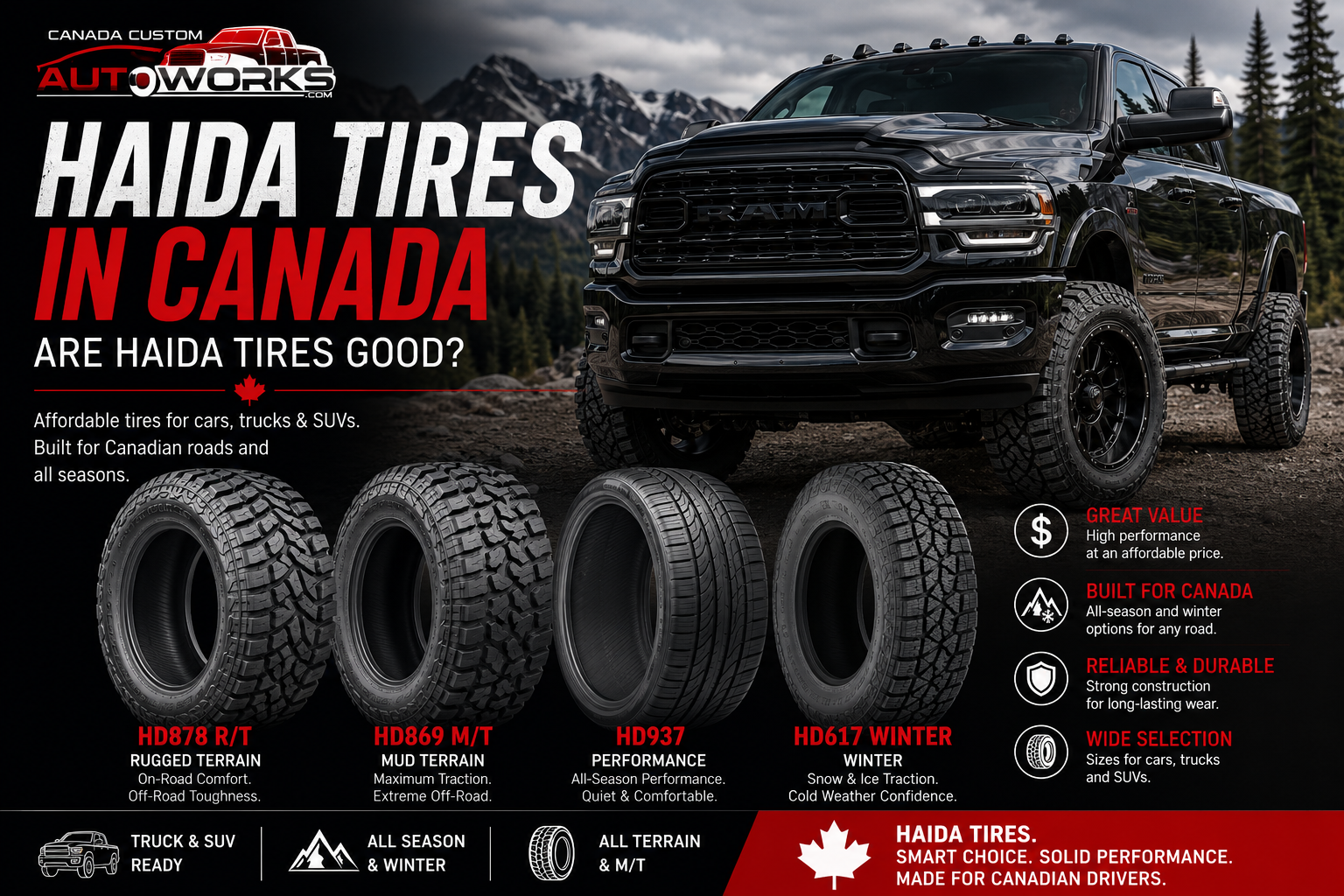
Haida tires are best known as budget-friendly tires that give drivers access to multiple tire categories without premium-brand pricing. For many Canadian buyers, the appeal is simple: they want a tire that fits properly, performs reliably for normal driving, and costs less than many major-name alternatives. Haida’s product range covers several common needs:- Passenger car tires.
- SUV and crossover tires.
- Light truck tires.
- Winter tires.
- All-terrain tires.
- Mud-terrain tires.
- Rugged-terrain tires.
- Performance-style tire sizes.
Quick Answer
Haida tires are good for Canadian drivers who want affordable replacement tires, truck tire options, or seasonal tire choices without paying premium prices. They are best for value-focused buyers, but drivers who want maximum winter braking, luxury ride comfort, or top-tier performance may still prefer premium tire brands.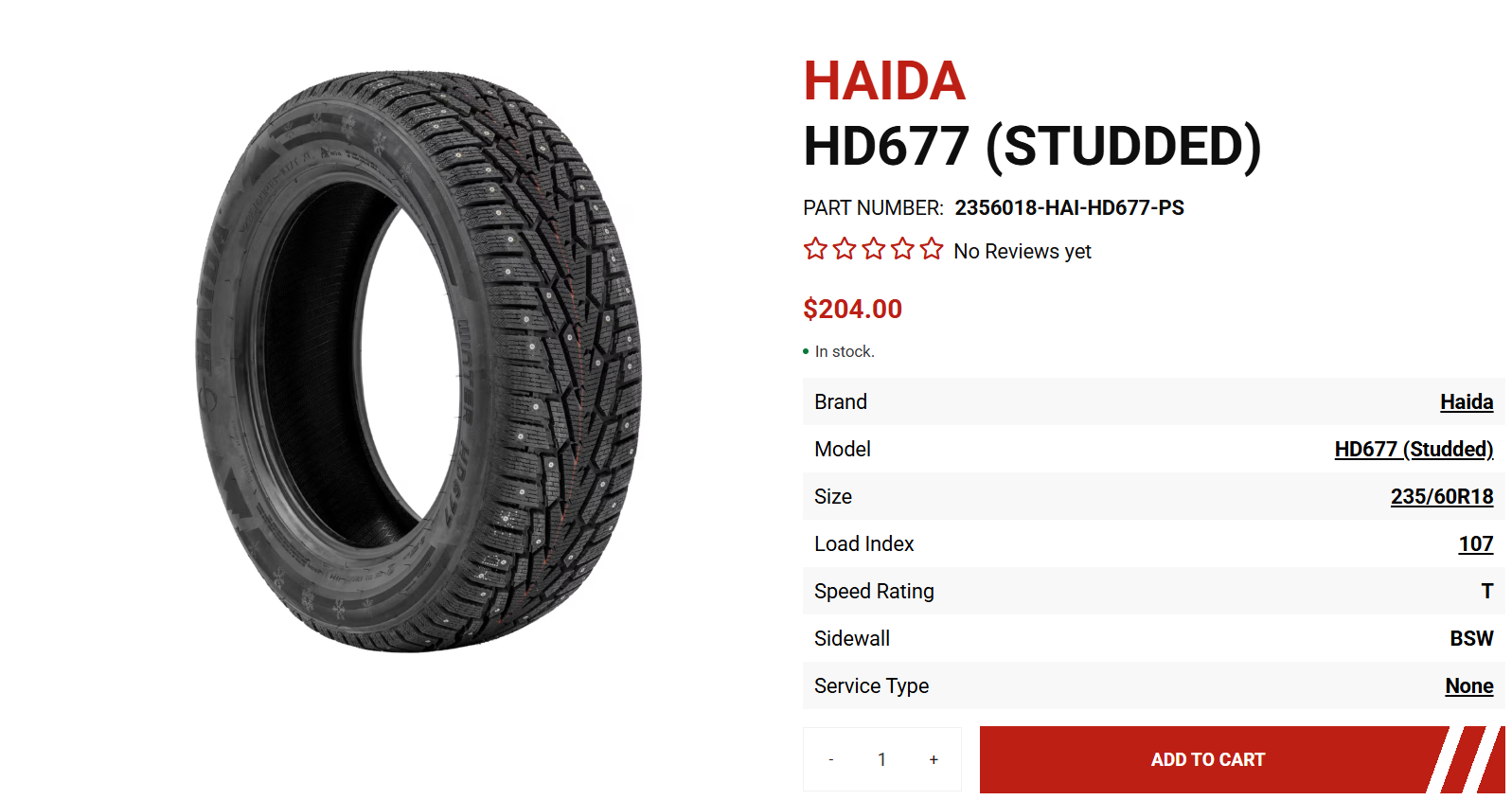
Are Haida Tires Good for Canadian Winter Driving?
Haida winter tires can be a practical choice for Canadian drivers looking for a lower-cost winter tire option. The key is making sure you are buying an actual winter tire, not a standard all-season or performance tire being used outside its ideal conditions. Transport Canada recommends looking for the three-peak mountain snowflake symbol when shopping for winter tires, because tires with this symbol meet specific snow traction performance requirements. Transport Canada also notes that all-season and summer tires begin losing elasticity below 7°C, while winter tires are designed to keep grip at lower temperatures.What to Check Before Buying Haida Winter Tires
Before choosing Haida winter tires in Canada, check:- Three-peak mountain snowflake rating.
- Correct tire size.
- Load index.
- Speed rating.
- Tread depth and tread design.
- Whether the tire should be installed in a full set of four.
- Your local winter driving conditions.
Expert Tip
Do not compare Haida winter tires against premium winter tires only by price. Compare the tire’s winter rating, tread design, size availability, and whether it fits the way you actually drive in winter.Are Haida Tires Good for Trucks and SUVs?
Haida tires can be a good option for trucks and SUVs when the tire model matches the vehicle’s weight, tire size, and driving use. Truck and SUV owners need to pay closer attention to load rating, sidewall strength, tire width, and tread pattern than drivers shopping for a basic passenger car tire. Canada Custom Autoworks carries Haida tires for cars, SUVs, and light trucks, with fitment support for proper sizing. This matters because many Haida tire buyers are looking for value in larger sizes, including truck, LT, rugged-terrain, and mud-terrain fitments.Best Haida Tire Types for Trucks and SUVs
| Haida Tire Type | Best For | What to Watch |
| Rugged-terrain tires | Lifted trucks, daily trucks, mixed road use | Road noise, ride comfort, tire size |
| Mud-terrain tires | Aggressive truck builds, mud, loose terrain | Wet-road comfort, highway noise |
| All-terrain tires | SUVs, light trucks, gravel roads | Load rating and winter performance |
| Winter tires | Cold-weather driving | 3PMSF rating and tread depth |
| Passenger/SUV tires | Daily driving | Tread life and road comfort |
Haida HD878 Review: Is This Rugged-Terrain Tire Worth It?
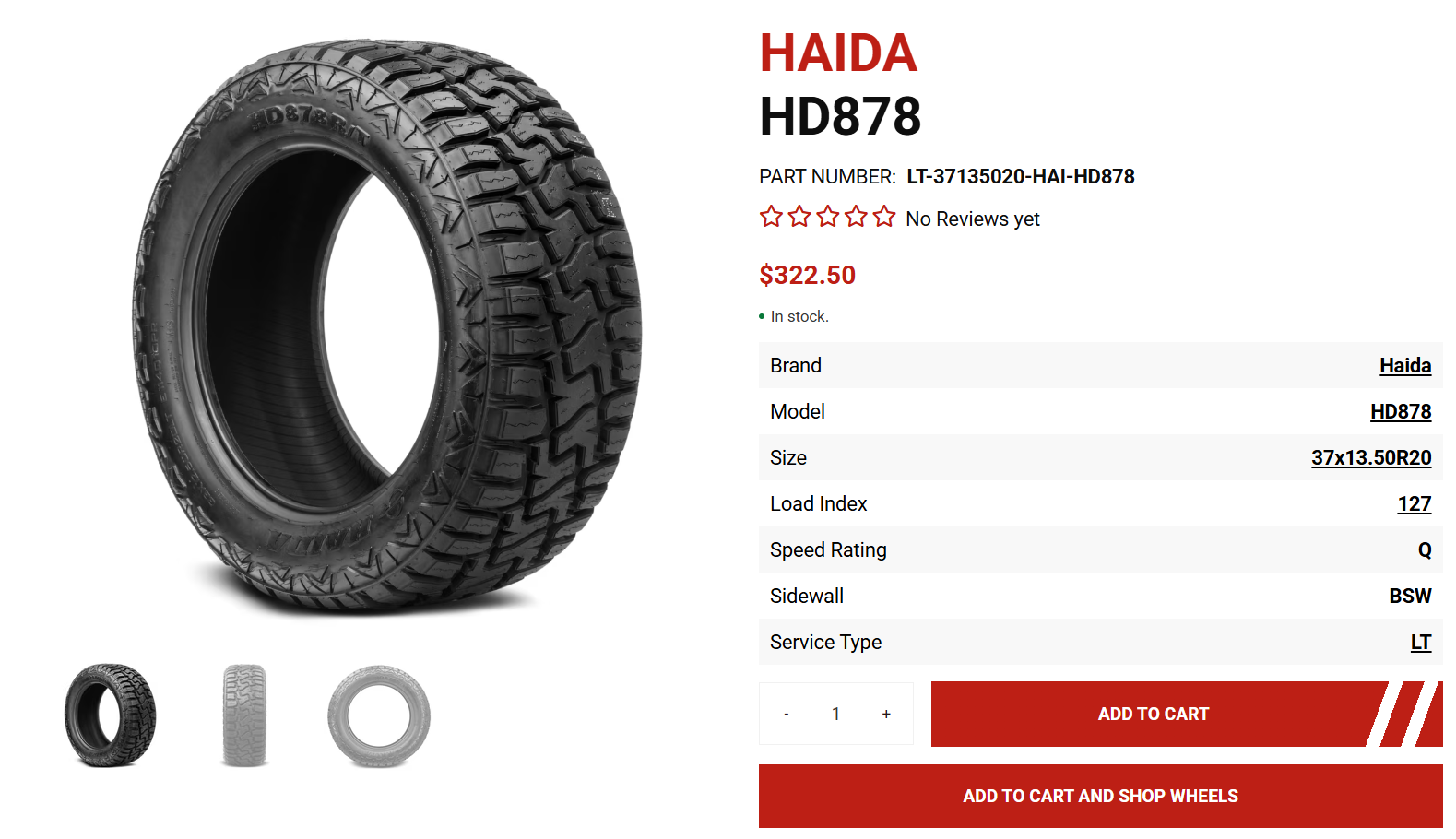
The Haida HD878 is one of the more important Haida models for Canadian truck owners because it targets the rugged-terrain segment. Rugged-terrain tires usually sit between all-terrain and mud-terrain tires. They are designed to give trucks a more aggressive look while still being more road-friendly than full mud-terrain tires. Canada Custom Autoworks lists multiple Haida HD878 sizes, including LT and flotation-style sizes such as 33×12.50R20LT, 35×12.50R20LT, 33×12.50R18LT, LT285/70R17, and others.Who Should Consider Haida HD878 Tires?
The Haida HD878 may make sense for:- Truck owners who want an aggressive tire look.
- Drivers with lifted or leveled pickups.
- SUV and light truck owners who want rugged styling.
- Buyers looking for a lower-cost rugged-terrain option.
- Drivers who split time between pavement, gravel, and light off-road use.
What to Consider Before Buying HD878
The HD878 should be compared carefully against how you use your truck. If you spend most of your time on highways and want the quietest ride possible, a highway tire may be better. If you want a more aggressive stance and occasional off-road capability, the HD878 may be a better fit.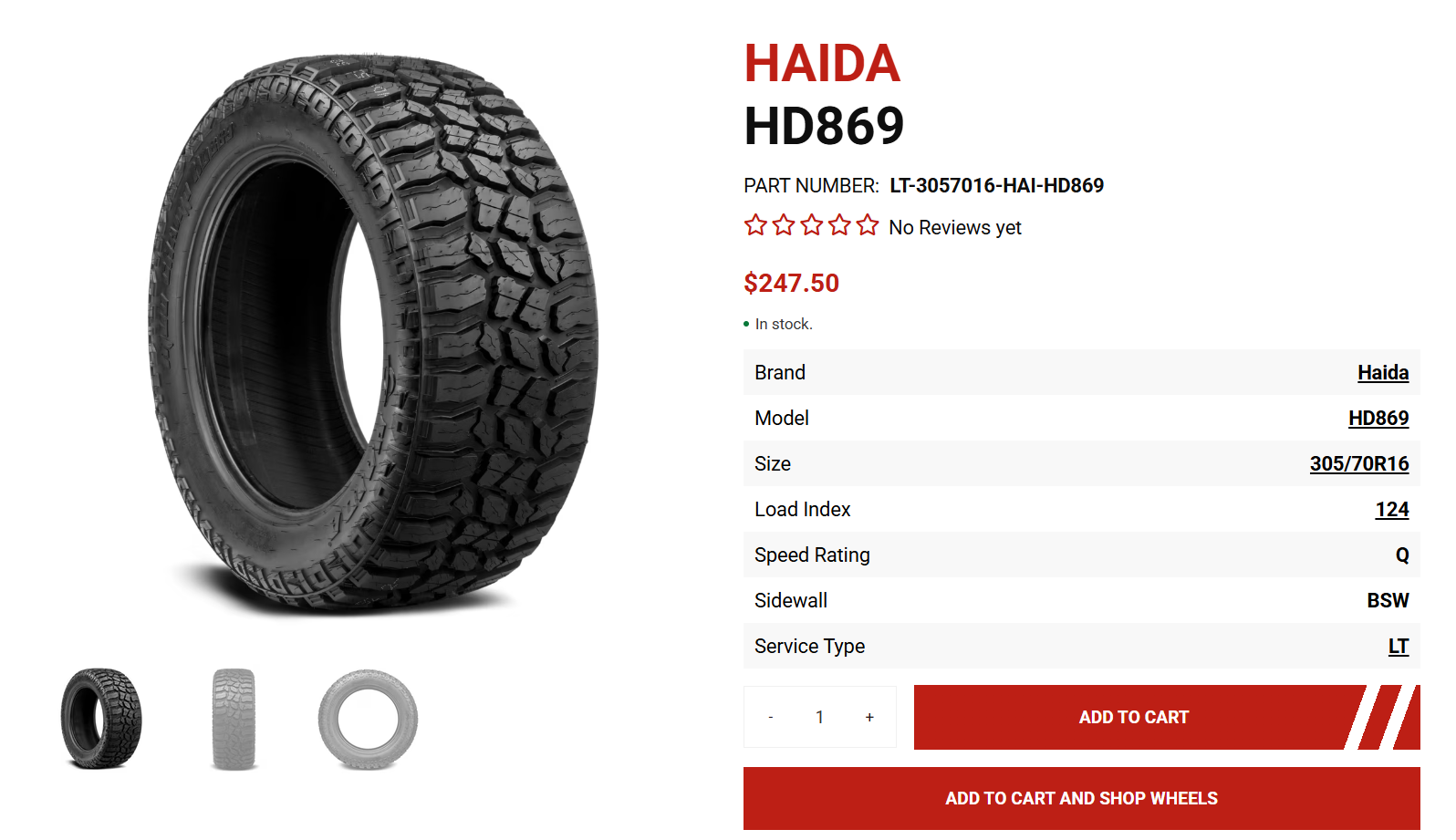
Haida HD869 Review: Is It Good for Mud-Terrain Use?
The Haida HD869 M/T is positioned as a mud-terrain option. Mud-terrain tires are usually built for drivers who need more aggressive tread blocks, stronger terrain bite, and a bold truck appearance. They are common on lifted trucks, trail-focused SUVs, and vehicles that need better grip in mud, loose dirt, or rougher conditions. Haida Tires Canada lists HD869 M/T as part of its tire lineup.Best Uses for Haida HD869 M/T
The HD869 M/T is most likely to appeal to drivers who want:- Aggressive mud-terrain styling.
- Stronger tread bite than a highway tire.
- A bold look for trucks and SUVs.
- A budget-conscious mud-terrain option.
- A tire for off-road-inspired builds.
What to Know Before Choosing Mud-Terrain Tires
Mud-terrain tires are not always the best choice for every driver. They can be louder on pavement, may feel less refined than highway tires, and can wear differently depending on alignment, rotation, and driving style. If your truck is mostly used for commuting, an all-terrain or rugged-terrain tire may be more practical.Haida HD921 Review: Is It Good for Passenger Cars and Performance Sizes?
The Haida HD921 is a passenger/performance-style tire option that appears in multiple low-profile sizes. This type of tire is more relevant for cars, crossovers, and custom wheel setups than for off-road trucks. Canada Custom Autoworks lists Haida HD921 sizes such as 225/30R22, 275/25R24, 305/40R22, 195/45R16, 255/35R20, and other performance-oriented fitments.Who Should Consider Haida HD921 Tires?
Haida HD921 tires may be worth considering for:- Drivers needing affordable low-profile replacement tires.
- Cars with aftermarket wheels.
- SUVs with larger diameter wheels.
- Value-focused buyers who want sportier fitments.
- Vehicles used mainly in warmer road conditions.
What to Consider
Low-profile tires can affect ride comfort, road noise, pothole protection, and wheel damage risk. In Canada, that matters because rough roads, potholes, and seasonal temperature changes can be hard on low-profile setups. Make sure the tire size is correct and the vehicle is aligned properly.Haida Tires vs Premium Tire Brands in Canada
Haida tires should be viewed as a value-focused alternative, not a direct replacement for the highest-end premium tire brands. Premium brands often offer stronger independent testing history, more advanced compounds, longer warranties, quieter ride quality, and more consistent performance at the limits. That does not mean every driver needs a premium tire. Many vehicles are used for daily commuting, errands, highway driving, and basic seasonal use. In those cases, a properly selected budget tire can be a smart purchase.| Category | Haida Tires | Premium Tire Brands |
| Price | Lower upfront cost | Higher upfront cost |
| Selection | Broad budget-focused range | Very wide category coverage |
| Winter performance | Depends on model | Often stronger in premium winter lines |
| Road noise | Varies by tread type | Often more refined |
| Truck fitments | Good budget availability | More premium options |
| Best buyer | Value-focused drivers | Drivers wanting maximum performance |
When Haida Tires Make Sense
Haida tires make sense if you want affordable tires for normal driving, need truck or SUV sizes at a lower cost, or want a budget winter or rugged-terrain option.When Premium Tires May Be Better
Premium tires may be better if you drive long distances, need the quietest ride, tow frequently, drive aggressively, or want maximum winter braking and wet-road performance.Are Haida Tires Good for Daily Driving?
Haida tires can be good for daily driving when you choose the correct model for your vehicle. A passenger tire, winter tire, rugged-terrain tire, and mud-terrain tire will all feel very different on the road. For daily driving, focus on:- Road noise.
- Wet traction.
- Braking feel.
- Ride comfort.
- Tread life.
- Fuel efficiency.
- Fitment accuracy.
- Seasonal suitability.
How Long Do Haida Tires Last?
Haida tire life depends on the model, vehicle, road conditions, driving style, tire pressure, alignment, and rotation schedule. A budget tire can last well when properly maintained, but poor maintenance can shorten the life of any tire, including premium brands. The biggest factors that affect tire life are:- Correct tire pressure.
- Regular rotations.
- Proper wheel alignment.
- Balanced wheels.
- Driving habits.
- Road surface.
- Vehicle weight.
- Seasonal storage.
- Tire category.
Expert Tip
If you buy Haida tires to save money, protect that savings with regular rotations and alignment checks. Uneven wear can turn a good tire deal into an early replacement.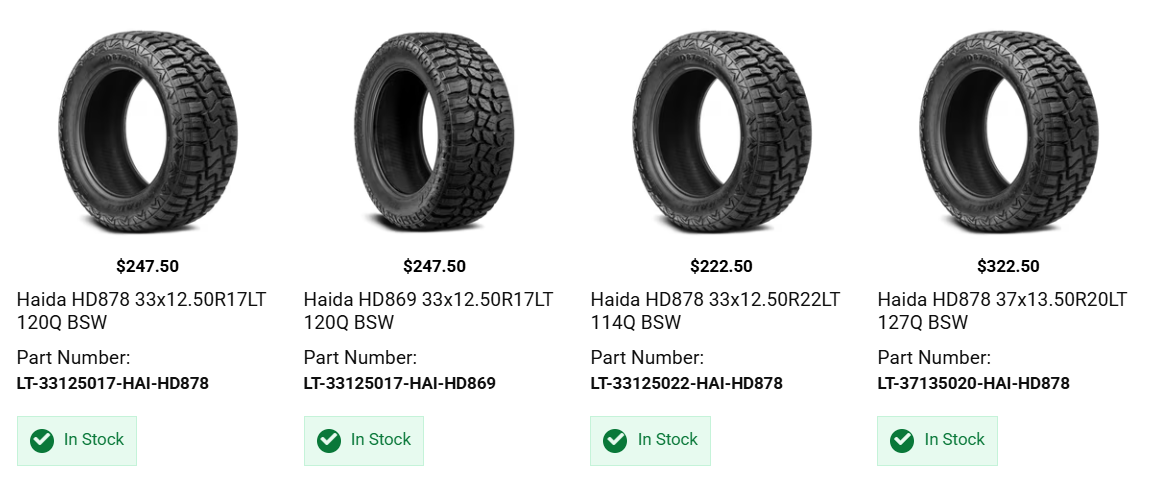
Which Haida Tire Is Best for Your Vehicle?
The best Haida tire depends on what you drive and where you drive. Do not choose only by price or tread appearance.| Vehicle Type | Best Haida Tire Category | Main Priority |
| Compact car | Passenger or winter tire | Comfort, braking, fuel efficiency |
| Sedan | Passenger touring or winter tire | Tread life and wet traction |
| Crossover | All-season, all-weather, or winter | Stability and year-round control |
| SUV | All-terrain, winter, or highway-style tire | Load rating and comfort |
| Pickup truck | Rugged-terrain, all-terrain, or mud-terrain | Durability and fitment |
| Lifted truck | LT rugged-terrain or mud-terrain | Clearance, load rating, stance |
For Cars
Choose a Haida passenger or winter model based on your season. If you drive year-round in Canadian winter conditions, do not rely on a summer or performance-style tire during cold months.For SUVs
SUV drivers should compare load rating, ride comfort, and seasonal traction. A family SUV may need a different tire than a modified SUV or off-road-style build.For Trucks
Truck owners should check LT sizing, load range, sidewall strength, and clearance. Haida HD878 and HD869 may be worth comparing for more aggressive truck setups.Where Can You Buy Haida Tires in Canada?
Haida tires are available through tire retailers serving Canadian drivers. Canada Custom Autoworks carries Haida tire options and lists Haida as a brand for cars, SUVs, and light trucks, with multiple model pages and fitment options available. When buying Haida tires in Canada, compare:- Tire model.
- Tire size.
- Load index.
- Speed rating.
- Winter or all-season suitability.
- Vehicle fitment.
- Stock vs lifted setup.
- Road noise expectations.
- Warranty and availability.
- Whether you need tires only or a wheel-and-tire package.