Quick Answer
To choose the right tire size, start with your factory tire size, then decide whether you want to stay stock or upgrade. Check your wheel diameter, tire width, overall height, load rating, suspension setup, and wheel offset before buying. If your truck is lifted or leveled, you may be able to fit larger tires, but proper fitment still matters.How Do You Read a Tire Size?
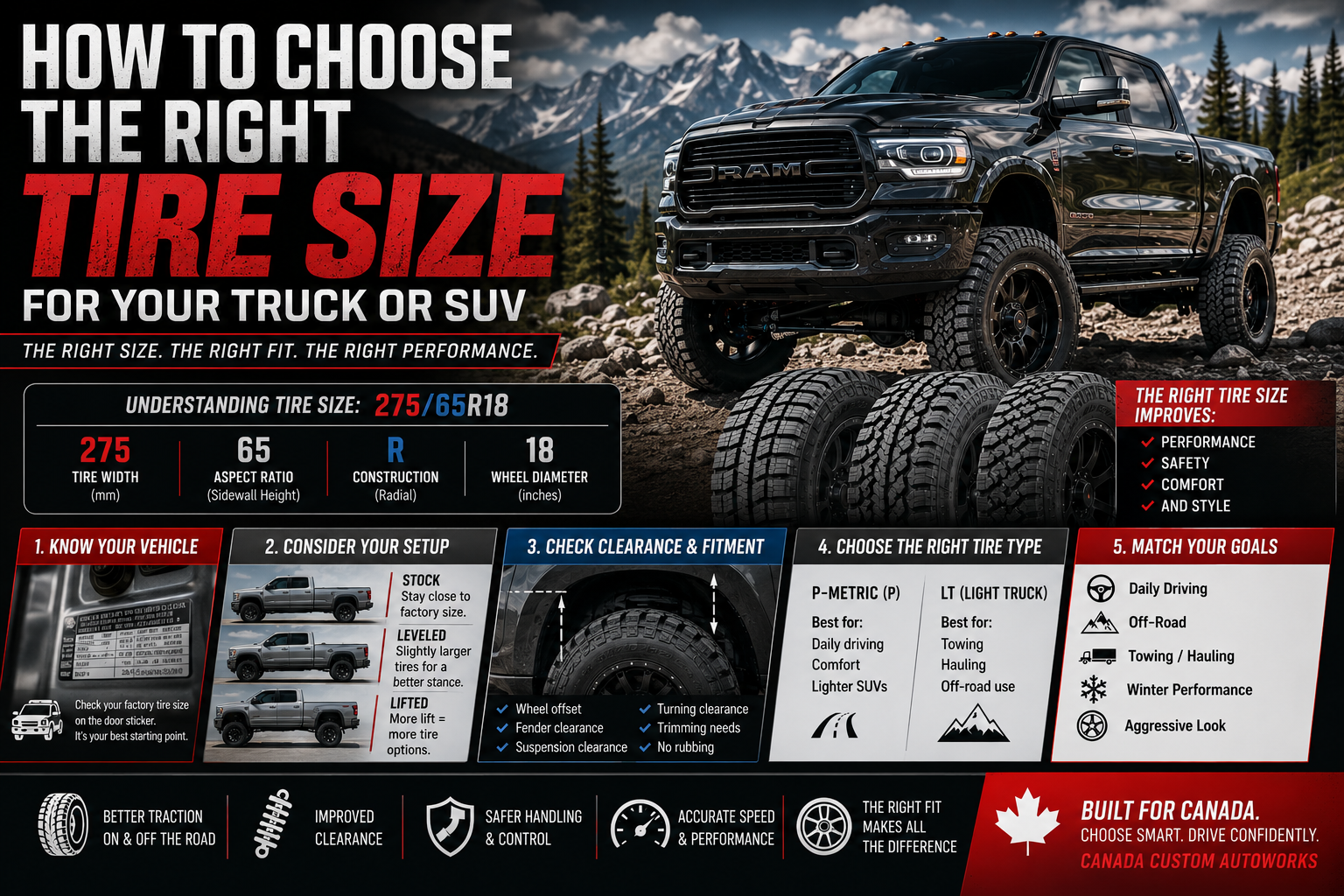
Most tire sizes follow a format like 275/65R18. Each part tells you something important about the tire.| Tire Size Part | What It Means |
| 275 | Tire width in millimetres |
| 65 | Aspect ratio, or sidewall height as a percentage of width |
| R | Radial construction |
| 18 | Wheel diameter in inches |
- tire width;
- sidewall height;
- wheel diameter;
- load index;
- speed rating;
- whether the tire is P-metric or LT-rated.
What Tire Size Should You Choose?
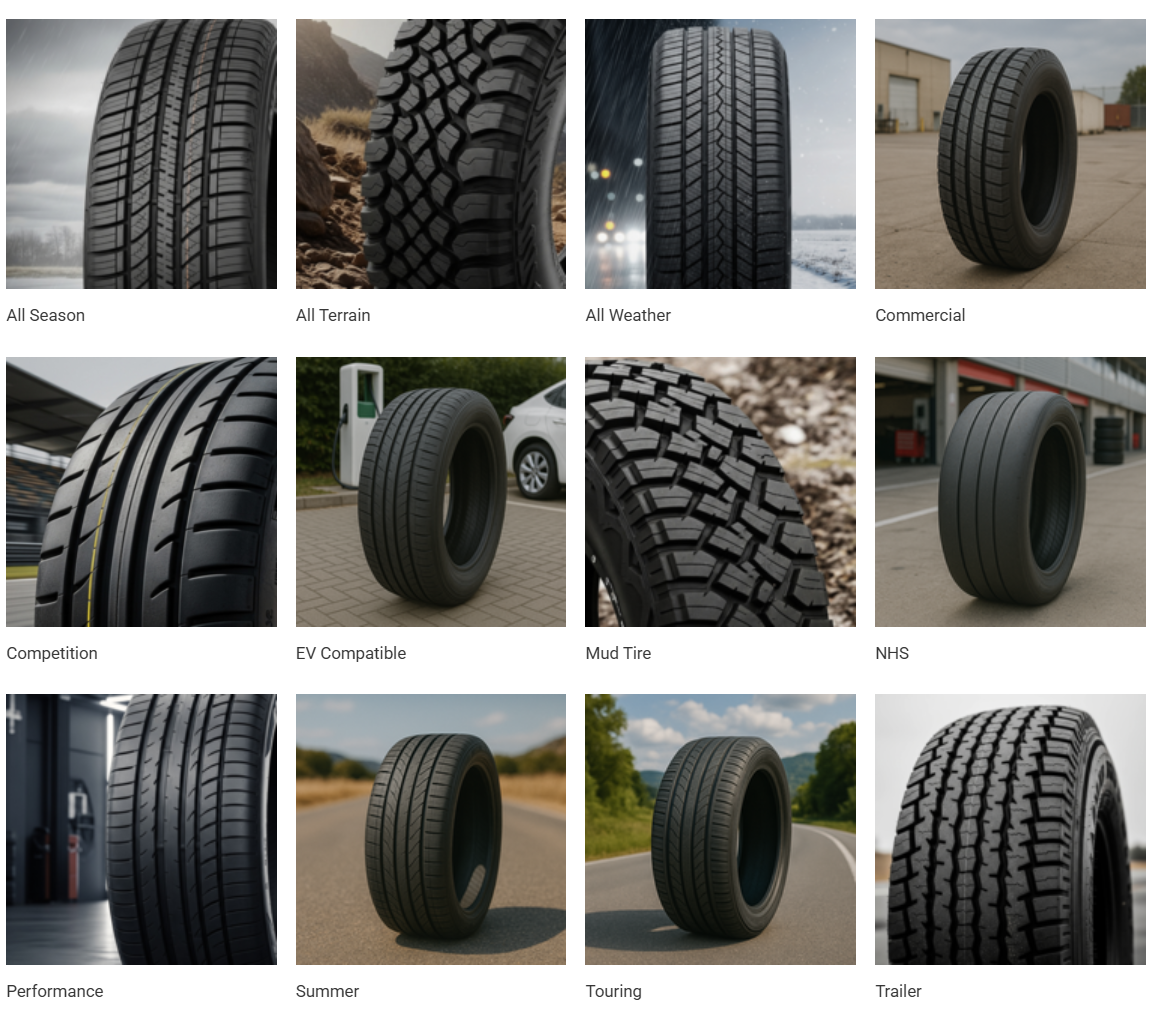
The right tire size depends on how you use your truck or SUV. A daily driver may need a comfortable, efficient tire, while a lifted truck may need a larger all-terrain or rugged-terrain setup.Choose your tire size based on:
- your factory tire size;
- wheel size;
- suspension height;
- lift kit or leveling kit;
- wheel offset;
- tire type;
- towing or hauling needs;
- road and weather conditions;
- how much road noise you can accept.
Can You Put Bigger Tires on a Truck or SUV?
Yes, you can often put bigger tires on a truck or SUV, but the amount of extra size depends on the vehicle and setup. Some trucks can fit a slightly larger tire on stock suspension, while others may need a leveling kit or lift kit. Bigger tires may improve:- ground clearance;
- off-road traction;
- appearance;
- sidewall protection;
- stance.
- fuel economy;
- braking;
- acceleration;
- steering feel;
- ride comfort;
- speedometer accuracy;
- rubbing at full turn.
Tire Size and Wheel Offset
Wheel offset plays a major role in tire fitment. Even if the tire size looks correct, the wrong wheel offset can cause rubbing against the fender, suspension, or inner wheel well. A more aggressive offset can push the wheel outward, creating a wider stance. This can look great on trucks, but it may also require trimming, fender flares, or a lift kit. Before choosing a tire size, check:- wheel width;
- wheel offset;
- bolt pattern;
- hub bore;
- suspension clearance;
- fender clearance;
- turning clearance.
Expert Tip
Never choose tire size and wheel offset separately. They work together. A tire that fits on one wheel may rub badly on another wheel with a different offset.Tire Size for Stock Trucks and SUVs
If your truck or SUV is stock, the safest choice is to stay close to the factory tire size. You may be able to go slightly larger, but major size jumps can create clearance problems.Best for stock vehicles:
- factory-size replacement tires;
- slightly wider tires if clearance allows;
- all-season, all-weather, or highway tires for daily use;
- mild all-terrain tires for trucks and SUVs.
- predictable handling;
- comfortable ride quality;
- good fuel economy;
- minimal rubbing risk;
- no major suspension changes.
Tire Size for Leveled Trucks
A leveling kit usually raises the front of the truck, which can create extra room for larger tires. This is a popular setup for truck owners who want a better stance without installing a full lift kit.Leveled trucks are good for:
- slightly larger all-terrain tires;
- improved front-end clearance;
- better truck stance;
- mild off-road use;
- daily driving with a more aggressive look.
Tire Size for Lifted Trucks
Lifted trucks can usually fit larger tires, but the right size depends on lift height, wheel offset, and suspension design. A 3-inch lift, 4-inch lift, and 6-inch lift can all support different tire sizes.Before choosing tires for a lifted truck, check:
- lift kit height;
- control arm clearance;
- fender clearance;
- wheel offset;
- tire width;
- trimming requirements;
- alignment needs;
- load rating.
LT Tires vs P Tires: Which Do You Need?
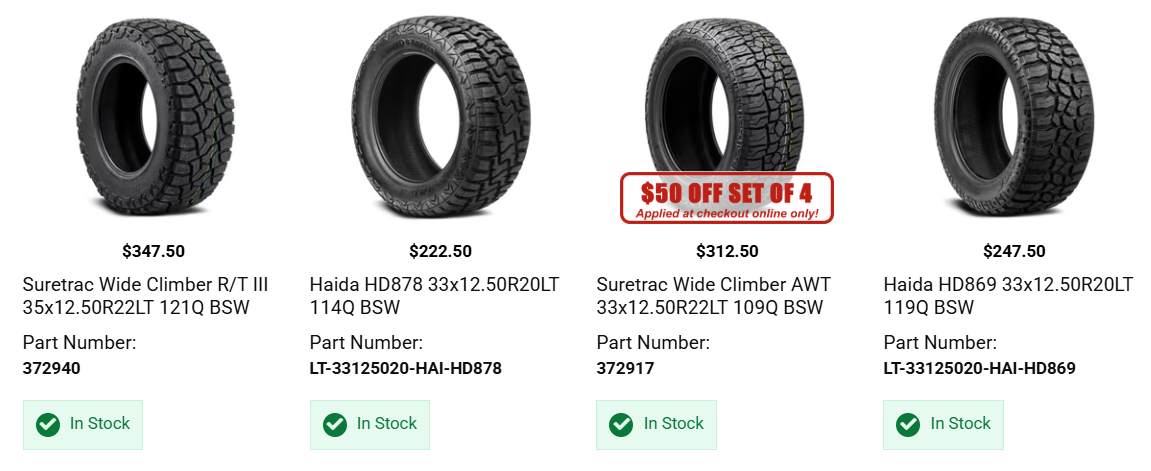
Truck and SUV tires may come in P-metric or LT versions. P-metric tires are often used for lighter-duty driving, while LT tires are built for heavier loads and tougher use.| Tire Type | Best For |
| P-metric tires | Daily driving, lighter SUVs, comfort-focused use |
| LT tires | Trucks, towing, hauling, off-road use, heavier loads |
- tow trailers;
- haul heavy loads;
- drive a pickup truck;
- use all-terrain or mud-terrain tires;
- drive on gravel, job sites, or rough roads.
- mostly drive on pavement;
- want a smoother ride;
- drive a lighter SUV or crossover;
- do not tow or haul often.
How Tire Size Affects Driving
Changing tire size can affect how your vehicle feels and performs. Even a small change can make a difference. Larger tires may affect:- fuel economy;
- acceleration;
- braking distance;
- steering response;
- road noise;
- ride comfort;
- speedometer reading;
- transmission shifting.
- better fuel efficiency;
- smoother ride;
- less road noise;
- easier replacement;
- lower rubbing risk.
How to Choose the Right Tire Size Step by Step
Use this simple process before buying new tires:- Check your current tire size Look at the sidewall or driver-side door sticker.
- Confirm your wheel size Make sure the tire matches your wheel diameter.
- Decide your goal Choose between daily driving, off-road use, towing, winter driving, or appearance.
- Check suspension setup Stock, leveled, and lifted vehicles fit different tire sizes.
- Review wheel offset Offset can change clearance and stance.
- Confirm load rating Trucks and SUVs often need stronger tires than passenger cars.
- Check for rubbing risk Look at fender, suspension, and turning clearance.
- Get expert fitment help This is especially important for custom wheels, lift kits, and oversized tires.