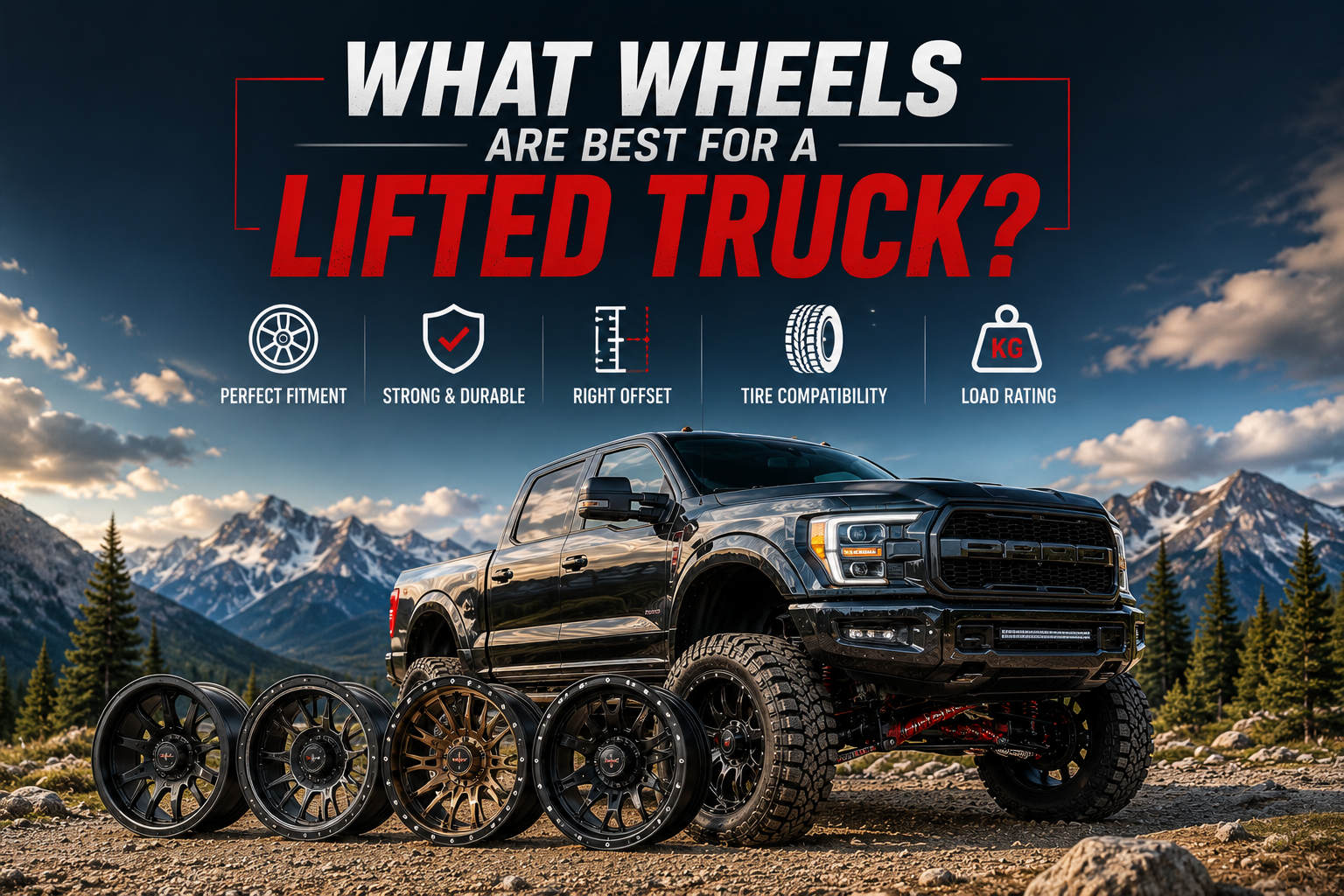
Quick Answer
The best wheels for a lifted truck are usually strong alloy wheels with the correct bolt pattern, proper load rating, suitable width, and an offset that matches your lift and tire size. For daily-driven lifted trucks, a moderate offset and practical wheel size are usually best. For aggressive off-road builds, wider wheels with a more aggressive offset may work better, but they need careful fitment planning. Good lifted truck wheels should offer:- proper brake and suspension clearance;
- enough strength for truck use;
- the right offset for your stance;
- compatibility with larger tires;
- correct bolt pattern and hub fitment;
- a style that matches the build;
- safe load capacity for towing, hauling, or off-road use.
What Makes a Wheel Good for a Lifted Truck?
A good wheel for a lifted truck is not just about appearance. It needs to work with the entire setup: suspension, tires, brakes, fenders, and steering clearance. The most important factors are:- Bolt pattern – the wheel must match your truck’s lug pattern.
- Wheel diameter – common lifted truck sizes include 17, 18, 20, and 22 inches.
- Wheel width – wider wheels create a stronger stance but can affect clearance.
- Offset – controls how far the wheel sits in or out.
- Backspacing – affects inner suspension clearance.
- Load rating – must support the truck’s weight and usage.
- Tire size compatibility – the wheel must fit the tire you want.
- Hub bore – should match properly or use correct hub-centric rings.
Expert Tip
Do not choose wheels before choosing your tire size. On lifted trucks, wheels and tires should be planned together because width, offset, diameter, and sidewall height all affect fitment.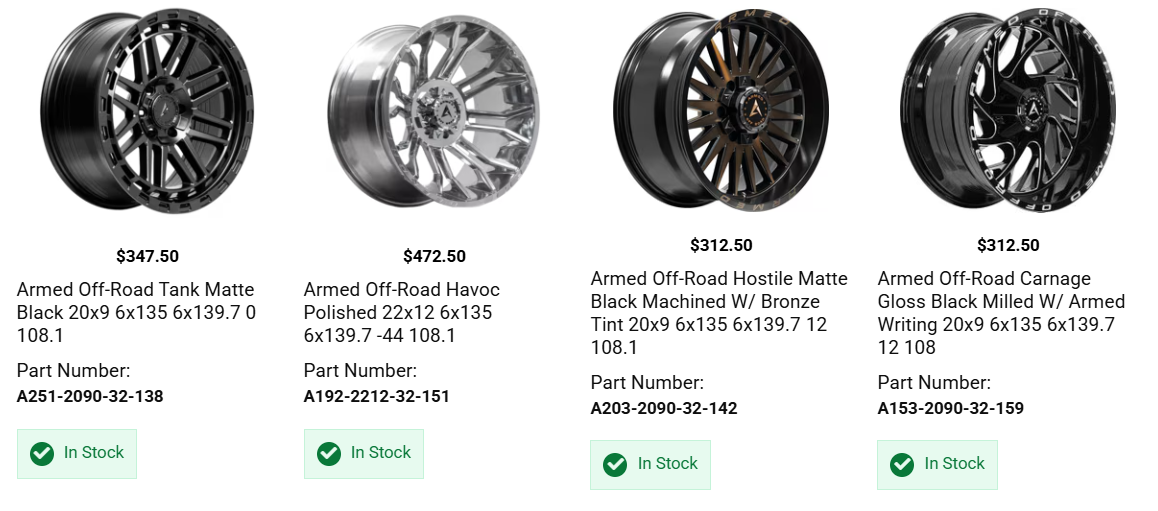
Best Wheel Sizes for Lifted Trucks
The best wheel size depends on how you use the truck. A daily driver, show truck, tow rig, and off-road build may all need different wheel setups.| Wheel Size | Best For | Why It Works |
| 17-inch wheels | Off-road builds | More tire sidewall, better trail comfort |
| 18-inch wheels | Balanced truck builds | Good mix of style and tire sidewall |
| 20-inch wheels | Daily drivers and custom trucks | Popular look with many tire options |
| 22-inch wheels | Show-style lifted trucks | Bold appearance, less sidewall |
| 24-inch wheels | Extreme visual builds | Strong style impact, less practical for rough use |
Are 20-Inch Wheels Good for a Lifted Truck?
Yes, 20-inch wheels are one of the most popular choices for lifted trucks. They offer a clean custom look, strong road presence, and plenty of tire options. 20-inch wheels are a good choice if you want:- aggressive stance;
- modern truck styling;
- good tire availability;
- balanced daily drivability;
- enough sidewall for all-terrain tires;
- a wheel size that works well with many lift kits.
Are 17-Inch or 18-Inch Wheels Better for Off-Roading?
For off-road use, 17-inch or 18-inch wheels are often better because they allow more tire sidewall. More sidewall can help absorb impacts, improve traction, and protect the wheel from rocks, potholes, gravel roads, and trail damage. Smaller wheels are better for:- trail driving;
- gravel roads;
- mud and snow;
- aired-down tires;
- rocky terrain;
- camping and overlanding;
- work trucks used on rough roads.
Wheel Offset Explained for Lifted Trucks
Wheel offset is one of the most important fitment numbers for a lifted truck. Offset controls how far the wheel sits inward or outward from the hub. There are three main types:- Positive offset – wheel sits more inward.
- Zero offset – wheel mounting surface is centered.
- Negative offset – wheel sits farther outward.
What Offset Is Best for a Lifted Truck?
The best offset depends on the lift height, tire size, and wheel width. There is no single perfect number for every truck.| Build Type | Offset Style | Best For |
| Mild lifted daily driver | Slight negative or moderate offset | Clean stance without excessive poke |
| Balanced custom truck | Moderate negative offset | Aggressive look with manageable clearance |
| Off-road build | Vehicle-specific offset | Clearance and function matter most |
| Show truck | More aggressive negative offset | Wide stance and visual impact |
Expert Tip
If you want a wide stance, check local road rules, fender coverage, and mud flap requirements. Wheels that stick out too far may look aggressive but can create practical and legal issues depending on where you drive.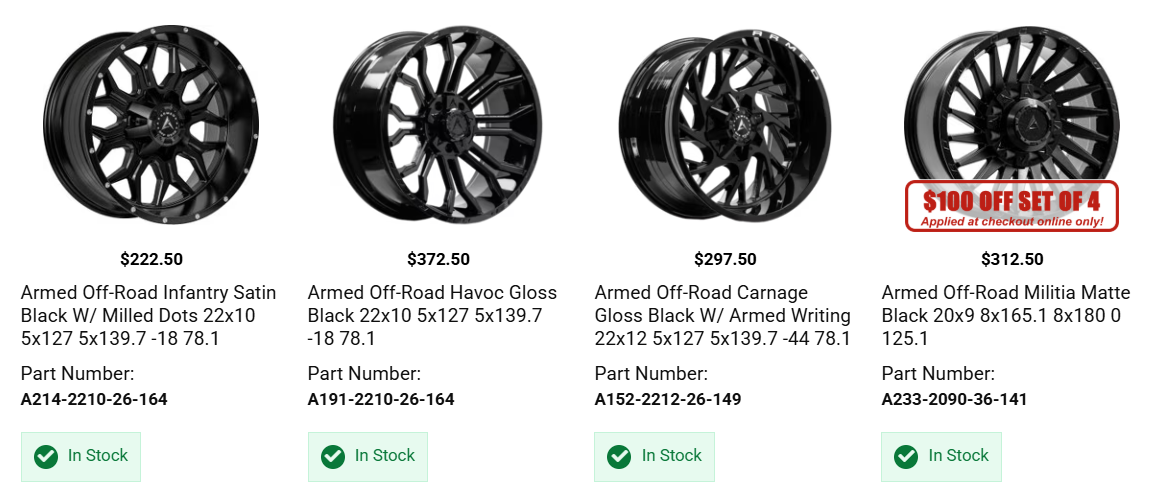
Wheel Width: How Wide Should Lifted Truck Wheels Be?
Wheel width affects tire shape, stance, and fitment. Common lifted truck wheel widths include 8.5, 9, 10, 12, and sometimes wider. For most truck owners:- 8.5–9 inches wide is good for daily driving and practical tire fitment.
- 10 inches wide gives a more aggressive stance.
- 12 inches wide creates a wide, show-style look.
- Wider than 12 inches is usually for extreme custom builds.
Best Wheels for Daily-Driven Lifted Trucks
For a daily-driven lifted truck, the best wheels are strong, practical, and not overly aggressive. You want a setup that looks custom but still drives well on highways, city streets, winter roads, and rough pavement. Good daily-driver wheel features include:- 18-inch or 20-inch diameter;
- moderate width;
- moderate offset;
- durable alloy construction;
- proper load rating;
- easy-to-clean finish;
- compatibility with all-terrain tires.
Best Wheels for Off-Road Lifted Trucks
For off-road lifted trucks, strength and tire sidewall are more important than flashy size. The wheel should be tough enough for rough use and allow enough tire sidewall for traction and impact protection. Look for:- 17-inch or 18-inch wheels;
- strong load rating;
- durable finish;
- proper brake clearance;
- tire sidewall support;
- practical offset;
- compatibility with all-terrain or mud-terrain tires.
Best Wheels for Show-Style Lifted Trucks
For a show-style lifted truck, appearance is the main priority. These builds often use larger wheels, wider widths, deeper lips, and more aggressive offsets. Popular show-style features include:- 20-inch, 22-inch, or larger wheels;
- gloss black, milled, chrome, or bronze finishes;
- deep lip or concave design;
- aggressive negative offset;
- wide stance;
- detailed spoke patterns.
Alloy vs Steel Wheels for Lifted Trucks
Most lifted trucks use alloy wheels because they offer better styling, lighter weight, and more finish options. Steel wheels are tougher in some work-use situations, but they are usually heavier and more limited in design.| Wheel Type | Best For | Pros | Cons |
| Alloy wheels | Most lifted trucks | Stylish, lighter, many designs | Can cost more |
| Steel wheels | Work trucks and rugged use | Strong, simple, affordable | Heavier, fewer styles |
What Style of Wheels Looks Best on a Lifted Truck?
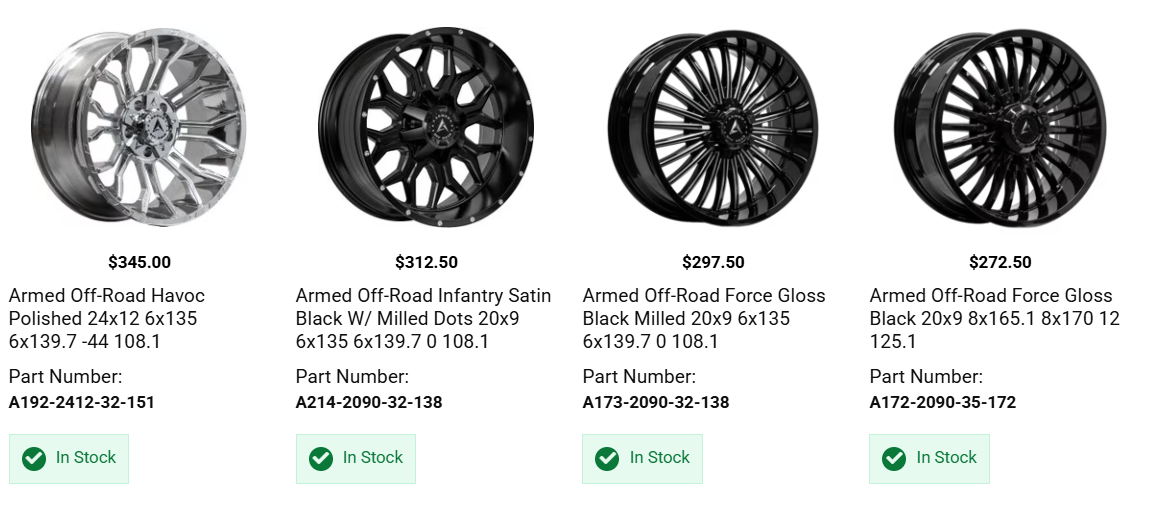
The best wheel style depends on the truck’s color, lift height, tire size, and build theme. A clean daily driver may look best with a simple matte black wheel, while a show truck may need a deep-lip milled or chrome design. Popular lifted truck wheel styles include:- Gloss black wheels for a clean aggressive look.
- Matte black wheels for rugged off-road styling.
- Black and milled wheels for contrast and detail.
- Bronze wheels for modern custom builds.
- Chrome wheels for classic truck styling.
- Deep lip wheels for wide-stance builds.
- Concave wheels for a bold modern look.
How to Match Wheels With Tires on a Lifted Truck
Wheels and tires need to work as one package. A large wheel with a thin tire may look good on a show truck but perform poorly on rough roads. A smaller wheel with a larger sidewall may look more rugged and work better off-road. When matching wheels and tires, consider:- tire height;
- tire width;
- wheel diameter;
- wheel width;
- offset;
- load rating;
- sidewall height;
- tread type;
- suspension clearance.
- all-terrain tires for daily and mixed driving;
- rugged-terrain tires for aggressive looks and light off-road use;
- mud-terrain tires for serious off-road builds;
- winter tires for harsh Canadian winter conditions.
Common Mistakes When Choosing Wheels for a Lifted Truck
Many fitment problems happen because the wheel is chosen for looks only. A wheel can look perfect in photos but fit poorly on your specific truck. Avoid these mistakes:- choosing wheels before confirming tire size;
- ignoring offset and backspacing;
- buying wheels with the wrong bolt pattern;
- choosing a wheel with too low of a load rating;
- using too much negative offset for daily driving;
- forgetting brake clearance;
- ignoring hub bore;
- assuming all lifted trucks fit the same wheels;
- choosing style over safety.
How to Choose the Best Wheels for Your Lifted Truck
Use this simple process before buying:- Confirm your truck’s bolt pattern The wheel must match your vehicle exactly.
- Choose your tire size first Tire size affects the wheel width and offset you should choose.
- Check your lift height A 2-inch level, 4-inch lift, and 6-inch lift can all need different fitment.
- Pick the right wheel diameter Choose 17–18 inches for more off-road function or 20–22 inches for more style.
- Choose the right offset Decide how much stance you want without creating rubbing issues.
- Confirm load rating This is especially important for trucks that tow, haul, or run heavy tires.
- Think about real driving conditions Daily driving, winter roads, gravel roads, and trails all affect the best wheel choice.
- Get fitment support before ordering This helps avoid expensive mistakes and poor ride quality.
Where Can You Buy Wheels for Lifted Trucks in Canada?
You can buy wheels for lifted trucks from shops that understand truck fitment, lift kits, tire sizing, and suspension clearance. Canada Custom Autoworks offers wheels, tires, lift kits, leveling kits, and wheel and tire packages for truck and SUV builds. If you are upgrading a lifted truck, it is best to choose the wheels and tires together. This helps make sure the setup fits properly, looks balanced, and performs well on Canadian roads. A good shop should help you confirm:- bolt pattern;
- offset;
- wheel width;
- tire size;
- load rating;
- hub fitment;
- lift kit clearance;
- rubbing risk.