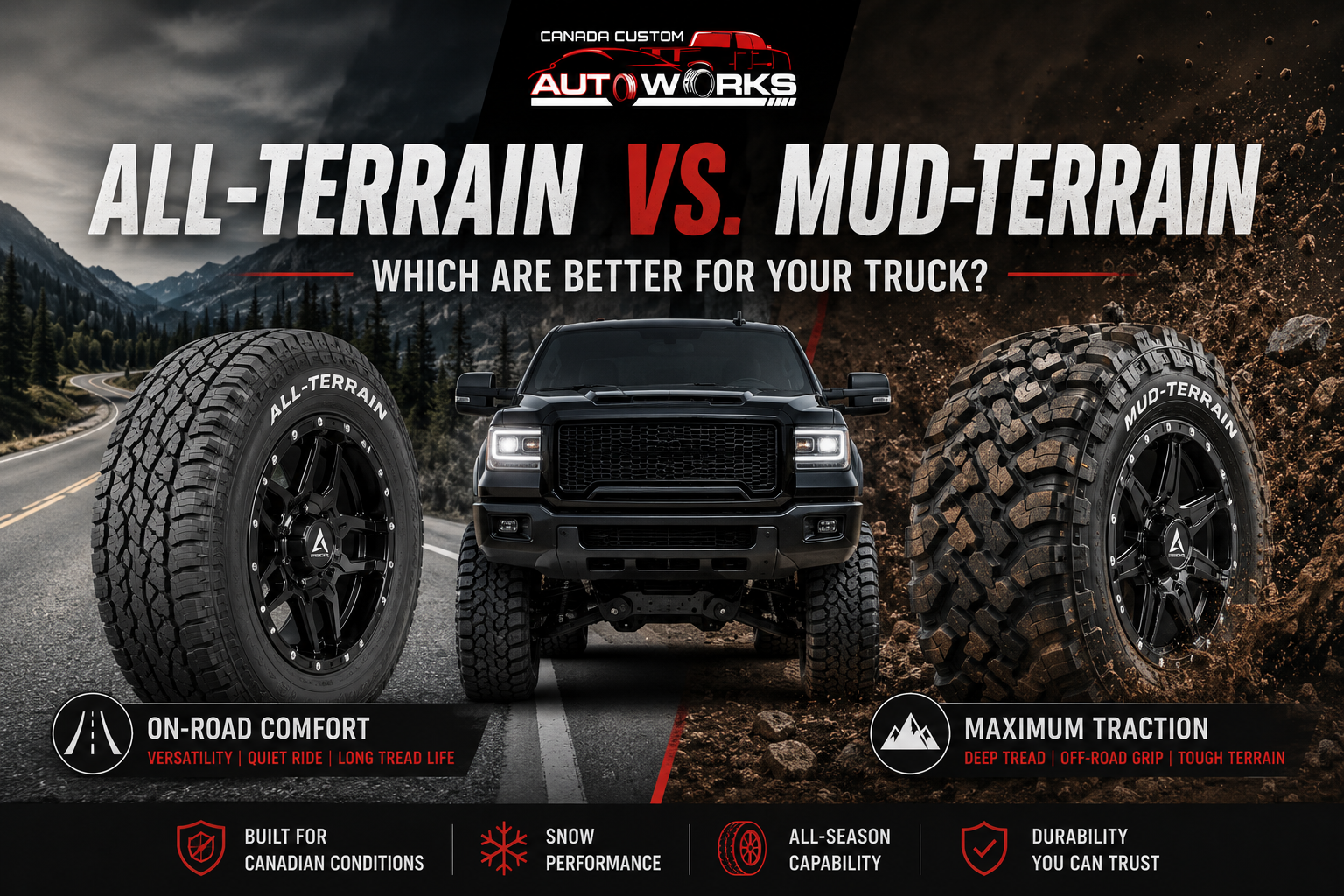
All-Terrain vs. Mud-Terrain Tires: Which Are Better for Your Truck?

Blog Post
Key Points:
  • All-terrain vs. mud-terrain tires offer different advantages, with all-terrain tires providing a balanced mix of on-road comfort and off-road capability, while mud-terrain tires are designed for maximum traction in challenging terrain.
  • Choosing the best truck tires depends on your driving habits, including highway commuting, towing, overlanding, off-road adventures, or driving through mud, snow, gravel, and rocky trails.
  • Differences in tread pattern, rubber compound, and tire construction affect traction, road noise, ride comfort, tread life, fuel efficiency, and year-round performance.
  • Understanding the pros and cons of all-terrain and mud-terrain tires helps truck owners avoid premature tire wear, unnecessary road noise, and performance compromises.
  • Comparing all-terrain vs. mud-terrain tires before buying makes it easier to select the right tire for your truck, driving conditions, and long-term performance goals.
Choosing between all-terrain vs. mud-terrain tires is one of the most important decisions truck owners make when upgrading their vehicle. Although both tire types are designed to perform beyond paved roads, they serve different purposes and excel in different environments. Selecting the right tires isn’t simply about appearance—it directly affects traction, handling, ride comfort, fuel efficiency, and the overall driving experience. Understanding how each tire performs in real-world conditions helps ensure you invest in a set that matches both your truck and your lifestyle. Many drivers assume mud-terrain tires are automatically the better option because of their aggressive tread design, while others believe all-terrain tires offer the perfect balance for every situation. In reality, the best choice depends on where and how you drive. Daily commuting, towing, overlanding, weekend trail riding, and extreme off-road adventures all place different demands on your tires. Factors such as road noise, tread life, wet-weather performance, snow traction, and durability should all be considered before making a decision. This guide compares all-terrain vs. mud-terrain tires across the categories that matter most to truck owners. You’ll learn how each tire type performs on the highway and off-road, how they differ in comfort, longevity, and maintenance, and which option is best suited for your driving habits. By understanding these differences, you’ll be able to choose truck tires that deliver the right balance of performance, capability, and value.

What Are the Main Differences Between All-Terrain and Mud-Terrain Tires?

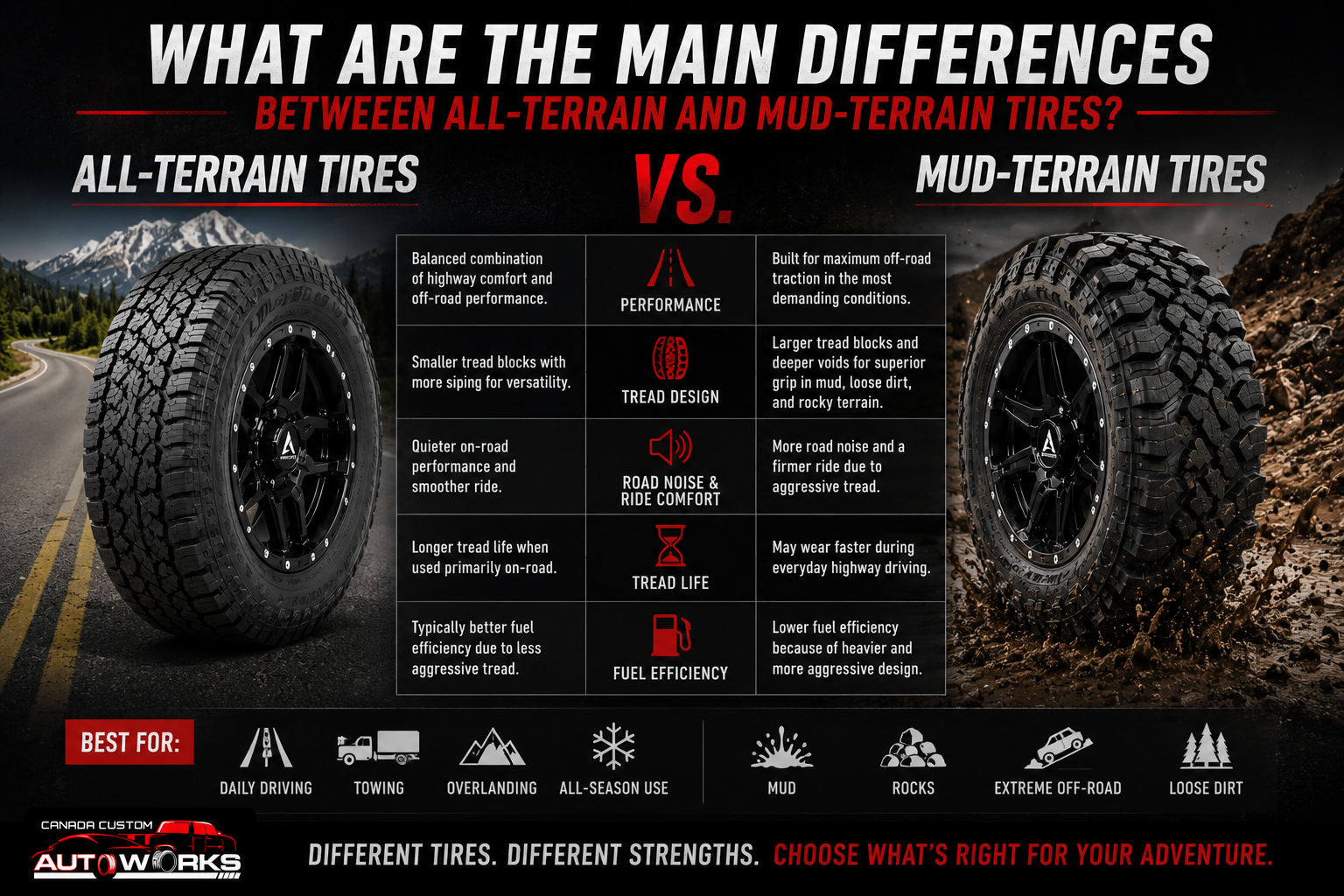
Although both tire types are built for trucks and SUVs that venture beyond paved roads, they are engineered for different priorities. Understanding the differences between all-terrain and mud-terrain tires is the first step toward selecting the right option for your vehicle and driving habits. While one emphasizes versatility, the other is designed to maximize off-road capability in the most demanding conditions. The biggest differences include:
  • All-terrain tires provide a balanced combination of highway comfort and off-road performance.
  • Mud-terrain tires feature larger tread blocks and deeper voids for superior grip in mud, loose dirt, and rocky terrain.
  • All-terrain tires generally produce less road noise and deliver a smoother ride.
  • Mud-terrain tires excel in extreme off-road environments but may wear faster during everyday highway driving.
  • Fuel efficiency is typically better with all-terrain tires because of their less aggressive tread pattern.
Neither tire is universally better than the other. Instead, each design is optimized for specific driving conditions. Choosing the right option depends on whether your truck spends more time on paved roads, mixed terrain, or challenging off-road trails.

Which Tires Perform Better on the Highway?

Many truck owners spend far more time driving on highways than on trails, making everyday road performance an important factor when choosing new tires. Comfort, stability, braking performance, and road noise all contribute to the overall driving experience and long-term satisfaction with your tire selection. When comparing highway performance, consider these factors:
  • All-terrain tires typically offer quieter operation at highway speeds.
  • Their tread design provides smoother handling and improved ride comfort.
  • Less rolling resistance often contributes to better fuel economy.
  • Wet-road traction is generally stronger because of optimized siping and tread patterns.
  • Mud-terrain tires can generate additional vibration and road noise due to their aggressive tread blocks.
For drivers who use their truck as a daily vehicle while still enjoying occasional off-road adventures, all-terrain tires often provide the best balance between comfort, handling, and durability without sacrificing moderate off-road capability.

Are Mud-Terrain Tires Better for Off-Road Driving?

Off-road conditions vary dramatically, from gravel roads and forest trails to deep mud, loose sand, and rocky climbs. Tire design plays a major role in maintaining traction and vehicle control when driving through these demanding environments. Mud-terrain tires are specifically engineered for challenging terrain because they feature:
  • Large tread blocks that increase grip on loose surfaces.
  • Wide voids that help eject mud and debris to maintain traction.
  • Reinforced sidewalls for improved resistance to punctures and cuts.
  • Better performance on rocky trails, deep mud, and uneven terrain.
  • Increased durability during demanding off-road use.
While mud-terrain tires dominate in extreme off-road situations, they may not be necessary for every truck owner. Drivers who primarily encounter gravel roads, light trails, snow, or occasional camping trips often find that all-terrain tires deliver more than enough off-road performance while remaining significantly more comfortable on pavement.

How Do Tread Life, Maintenance, and Cost Compare?

Long-term ownership costs extend beyond the purchase price of a new set of tires. Tread life, maintenance requirements, fuel consumption, and replacement frequency all influence the total cost of ownership over several years.
Feature All-Terrain Tires Mud-Terrain Tires
Highway Comfort Excellent Moderate
Road Noise Low High
Off-Road Capability Very Good Excellent
Tread Life Typically Longer Often Shorter
Fuel Efficiency Better Slightly Lower
Maintenance Lower Higher due to faster wear and regular rotation needs
Although mud-terrain tires may cost more to own over time because of increased wear and reduced fuel efficiency, they provide exceptional performance for drivers who frequently encounter harsh off-road conditions. For most everyday truck owners, all-terrain tires offer a more economical solution without compromising versatility.

How Do You Choose the Best Truck Tires for Your Driving Style?

The ideal tire depends less on the tire itself and more on how your truck is actually used. Choosing tires based on realistic driving conditions helps maximize performance, comfort, safety, and long-term value while avoiding unnecessary compromises. Before making your decision, ask yourself the following questions:
  • Do you drive primarily on highways or off-road trails?
  • How often do you encounter mud, rocks, snow, or loose terrain?
  • Is ride comfort important for daily commuting?
  • Do you regularly tow heavy loads or carry equipment?
  • Are you looking for maximum off-road capability or year-round versatility?
Answering these questions makes it much easier to determine whether all-terrain or mud-terrain tires are the better investment. Matching your tires to your driving habits ensures better performance in the environments where your truck spends the most time.

Are All-Terrain or Mud-Terrain Tires Better in Snow and Rain?

Driving in changing weather conditions requires tires that maintain reliable traction on wet pavement, light snow, and slippery roads. While both all-terrain and mud-terrain tires can perform in adverse weather, their tread design affects how well they grip different surfaces. Understanding these differences helps truck owners choose tires that provide confidence throughout the year. Weather performance depends on several important factors:
  • All-terrain tires generally provide better grip on wet pavement thanks to additional siping.
  • Many all-terrain tires carry the Three-Peak Mountain Snowflake (3PMSF) rating for severe winter service.
  • Mud-terrain tires perform well in deep snow by clearing packed snow from the tread.
  • On icy or wet roads, mud-terrain tires may provide less predictable handling because of their larger tread blocks.
  • Drivers who experience changing weather throughout the year often benefit from the versatility of all-terrain tires.

If your truck is driven daily through rain, occasional snow, and changing road conditions, all-terrain tires are usually the more practical option. Mud-terrain tires remain the better choice for trucks that regularly encounter deep mud, loose terrain, and demanding off-road environments where maximum traction is the priority.

Choosing Between All-Terrain vs. Mud-Terrain Tires

Selecting between all-terrain vs. mud-terrain tires comes down to understanding how and where your truck is driven most often. While both tire types offer excellent capability, they are designed for different purposes. All-terrain tires provide a balanced combination of highway comfort, long tread life, lower road noise, and dependable off-road performance, making them an excellent choice for daily drivers and weekend adventurers alike. Mud-terrain tires, on the other hand, deliver exceptional traction in deep mud, rocks, and challenging off-road conditions where maximum grip is essential. Before investing in new truck tires, consider your typical driving environment rather than choosing based solely on appearance. Factors such as weather conditions, towing requirements, fuel efficiency, ride comfort, maintenance costs, and off-road frequency all influence which tire will deliver the best long-term value. Matching your tires to your actual driving habits results in better performance, improved safety, and greater satisfaction throughout the life of the tires. Whether you’re upgrading a work truck, an overland build, or a weekend off-road vehicle, choosing the right tires is one of the most important decisions you can make. Working with experienced fitment specialists ensures you select the best combination of tire size, tread pattern, and performance characteristics for your truck, allowing you to enjoy reliable traction and confidence wherever the road—or trail—takes you.   Frequently Asked Questions:

What is the difference between all-terrain and mud-terrain tires?

The biggest difference between all-terrain and mud-terrain tires is their intended use. All-terrain tires are designed to balance everyday highway comfort with dependable off-road capability, while mud-terrain tires prioritize maximum traction in deep mud, rocks, and loose terrain. Choosing between them depends on how you use your truck most often.

Are all-terrain tires good enough for off-road driving?

Yes, all-terrain tires are more than capable of handling most off-road situations, including gravel roads, forest trails, dirt roads, light mud, and moderate rocky terrain. For drivers who split their time between highways and outdoor adventures, all-terrain tires provide an excellent combination of versatility, comfort, and durability.

Do mud-terrain tires wear out faster than all-terrain tires?

In many cases, mud-terrain tires wear more quickly because their aggressive tread design creates greater friction during everyday highway driving. They may also require more frequent tire rotations to promote even tread wear. However, when used in the environments they are designed for, mud-terrain tires provide outstanding durability and off-road performance.

Which truck tires are better for daily driving?

For most daily drivers, all-terrain tires are the better choice because they offer a quieter ride, improved fuel efficiency, longer tread life, and better handling on paved roads. They also maintain strong performance in light off-road conditions, making them a practical option for truck owners who need versatility throughout the year.

How do I choose the best truck tires for my driving needs?

The best truck tires depend on your typical driving conditions, weather, towing requirements, and how often you travel off-road. Evaluating factors such as highway mileage, terrain, ride comfort, traction needs, and long-term operating costs helps you choose tires that deliver the right balance of performance, safety, and durability for your truck.