 This guide breaks down exactly how to evaluate all-terrain tire brands for Canadian conditions, what features actually matter, and how to compare top options so you can make a confident, expert-level decision.
What makes an all-terrain tire suitable for Canada?
All-terrain tires marketed globally aren’t always optimized for Canadian realities. Here’s what truly matters:- Severe weather performance Look for the Three-Peak Mountain Snowflake (3PMSF) rating. This indicates the tire is certified for severe snow conditions, essential for most provinces.
- Cold-weather rubber compounds Cheap or generic A/T tires stiffen in cold temperatures, reducing grip. Premium brands use silica-enhanced compounds to stay flexible below freezing.
- Versatility across terrains Canada’s terrain mix includes:
- Snow and ice
- Gravel roads
- Mud and slush
- Wet highways
- Durability and sidewall strength Rural driving, logging roads, and construction zones demand reinforced sidewalls and puncture resistance.
- Road comfort and noise If your F-150 is also your daily driver, you’ll want a tire that doesn’t drone on the highway.
What should Ford F-150 owners specifically consider?
The F-150 is a versatile platform, but tire choice depends on how you use it: Daily driver (80% road / 20% off-road)- Prioritize comfort, fuel efficiency, and low noise
- Look for mild A/T tread patterns
- Balanced traction and durability
- Strong sidewalls and moderate tread aggression
- Aggressive tread
- Mud and rock capability
- Heavier construction
- Snow performance becomes the top priority
- 3PMSF rating is non-negotiable
Which features separate top tire brands from average ones?
Not all-terrain tires are built the same. Here’s what distinguishes premium options: Advanced tread design- Multi-angle siping for snow and wet grip
- Self-cleaning voids for mud evacuation
- Silica blends for cold-weather flexibility
- Longer tread life
- Reinforced carcass
- Cut- and chip-resistant materials
How do leading all-terrain tires compare?
Before choosing, it helps to see how top options stack up in real-world categories. Below is a comparison of popular all-terrain tires commonly selected for Ford F-150 trucks in Canada.| Tire Model | Best For | Winter Rating | Road Comfort | Off-Road Performance | Tread Life |
| BFGoodrich All-Terrain T/A KO2 | Rugged durability | ✔️ 3PMSF | Medium | Excellent | Very High |
| Falken Wildpeak A/T3W | Snow + all-around use | ✔️ 3PMSF | High | Very Good | High |
| Toyo Open Country A/T III | Balanced performance | ✔️ 3PMSF | High | Very Good | High |
| Goodyear Wrangler Duratrac | Aggressive off-road & snow | ✔️ 3PMSF | Medium-Low | Excellent | Medium |
| Nitto Ridge Grappler | Hybrid A/T-M/T style | ❌ (varies by spec) | Medium | Excellent | Medium |
How do you choose the right tire from this list?
If winter performance is your top concern: Go with Falken Wildpeak A/T3W or Toyo Open Country A/T III. These offer excellent snow traction without sacrificing comfort. If you want maximum durability and off-road toughness: BFGoodrich KO2 remains a benchmark for harsh environments and heavy-duty use. If you prioritize aggressive off-road capability: Goodyear Duratrac or Nitto Ridge Grappler deliver stronger traction in mud and loose terrain. If you want the best daily driving balance: Toyo and Falken are typically quieter and smoother on pavement.
Should you consider tire size and load rating?
Absolutely, this is often overlooked. Stock vs upgraded sizes- Larger tires improve ground clearance and aesthetics
- But it may affect fuel economy and gearing
- Essential for towing and hauling
- F-150 owners should ensure the tire matches or exceeds OEM specs
- Levelling kits or lifts may be required for oversized tires
- Avoid rubbing issues by consulting experts
Are all-terrain tires good year-round in Canada?
Yes, with the right choice. Modern A/T tires with 3PMSF ratings can:- Replace dedicated winter tires in many cases
- Handle snow, slush, and cold temperatures
- Extreme ice conditions may still benefit from dedicated winter tires
- Urban drivers may prefer a separate winter setup for maximum safety
What are common mistakes to avoid?
Choosing based on looks alone Aggressive tread doesn’t always mean better performance. Ignoring winter certification This is critical in Canada, don’t skip it. Overestimating your off-road needs Heavier, aggressive tires can reduce comfort and efficiency if you rarely leave pavement. Buying cheap alternatives Lower-cost tires often wear faster and perform poorly in cold weather.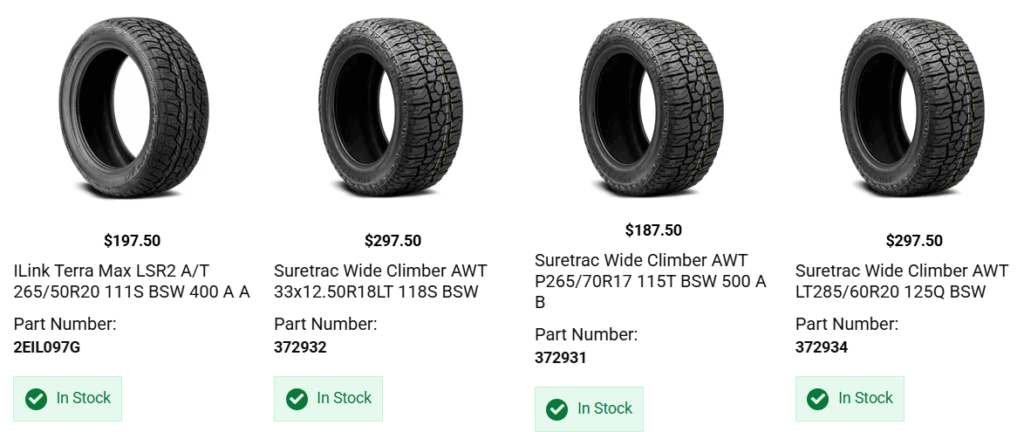
What’s the best choice for most F-150 owners?
For the majority of Canadian F-150 drivers, the best all-terrain tire is one that balances:- Winter performance
- Road comfort
- Off-road capability
- Long-term durability